Orbital Sander: Complete Guide to Uses, Benefits, Working & Selection for Industrial Sanding
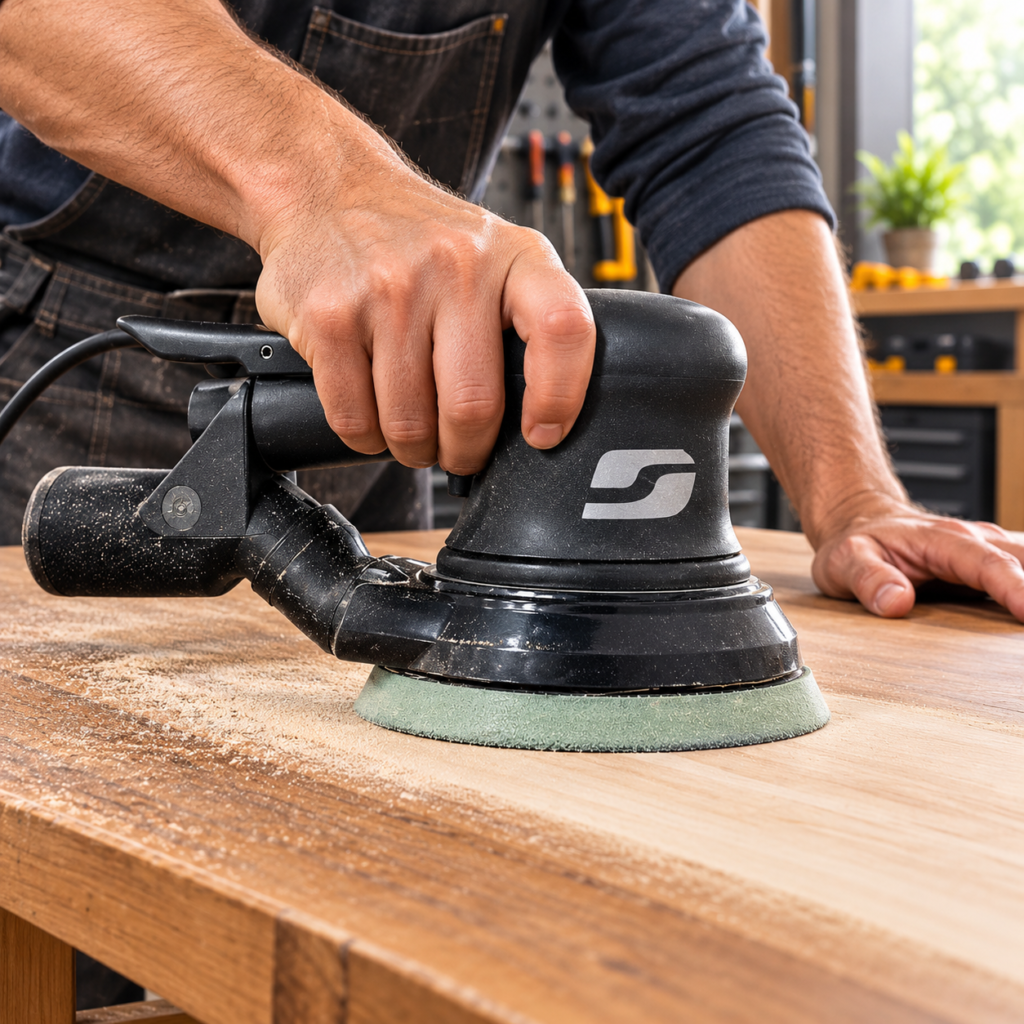
achieving a smooth and consistent surface is one of the most important stages in woodworking, furniture manufacturing, automotive refinishing, fabrication, paint preparation, and many industrial finishing applications.
a surface may look acceptable at first, but scratches, uneven sanding, old coatings, surface imperfections, or poor preparation can become clearly visible after paint, polish, coating, or finishing is applied.
This is why the sanding process matters.
an Orbital Sander is a widely used sanding tool designed to make surface preparation faster, more consistent, and less labour-intensive than relying entirely on manual sanding.
Depending on the application, orbital sanders can be used for wood sanding, furniture finishing, paint preparation, automotive bodywork, coating preparation, surface smoothing, and general industrial finishing.
For professional users, choosing the right orbital sander involves much more than selecting a machine and attaching sandpaper. Orbit pattern, abrasive grit, pad size, speed, power source, dust extraction, air requirements, surface material, and finishing expectations can all affect the final result.
Rahul Enterprises provides industrial tools and solutions for businesses in Jodhpur and across Rajasthan, including professional sanding solutions for workshops, furniture manufacturers, automotive facilities, fabrication units, and industrial users.
This complete guide explains what an orbital sander is, how it works, its benefits, applications, sanding techniques, abrasive selection, common problems, maintenance, and how to choose the right orbital sander for professional use.
What Is an Orbital Sander?
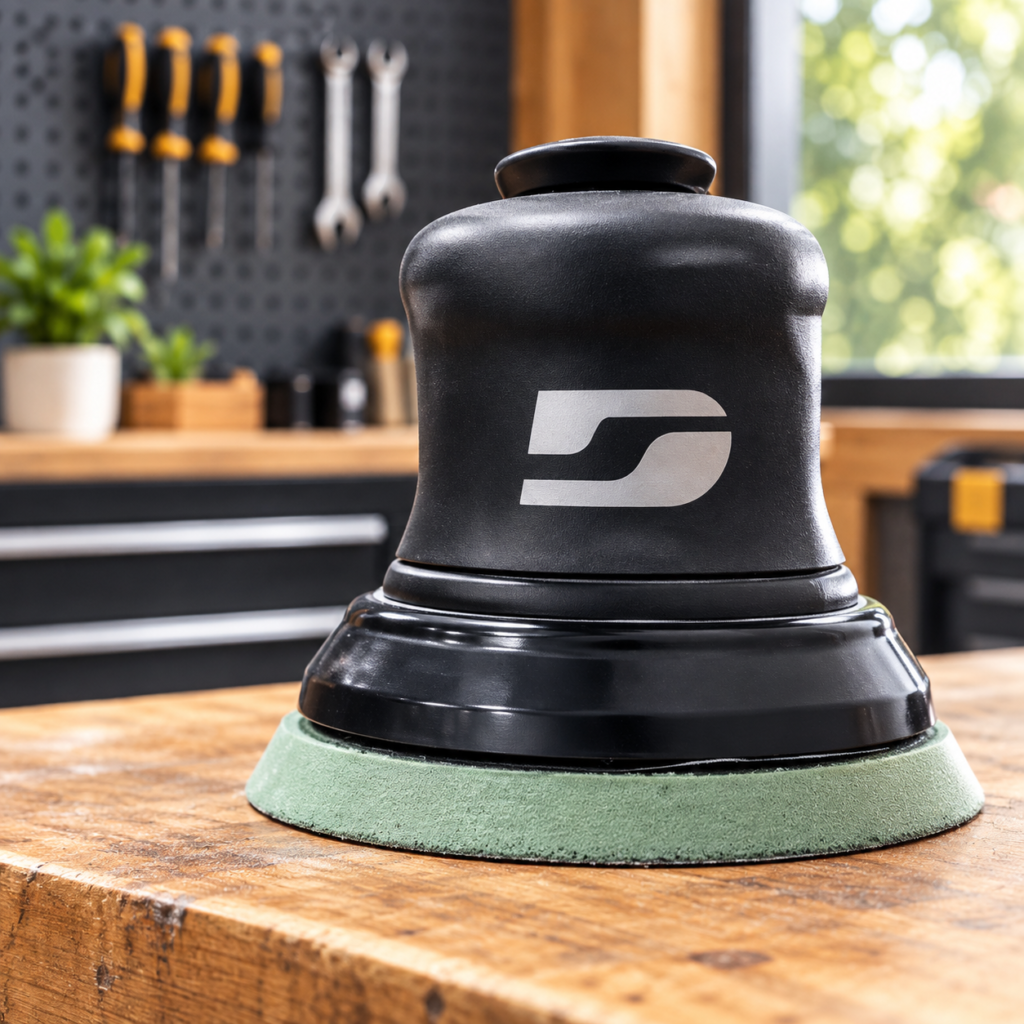
an orbital sander is a powered sanding tool that moves an abrasive pad in an orbital motion across a work surface.
Instead of requiring the operator to perform all sanding manually, the machine produces repeated sanding movement at speed, helping remove material and create a more uniform surface.
Orbital sanders are available in different designs for different applications.
Professional models may be powered by:
- Compressed air
- Electricity
- Battery systems, depending on tool design
In industrial environments where compressed air is already available, pneumatic orbital sanders can be particularly useful for repeated production and finishing work when correctly matched to the application and air supply.
Why Is Sanding Important Before Painting or Finishing?
a high-quality finish starts before the paint or coating is applied.
If the underlying surface contains scratches, rough areas, old finish, unevenness, or contamination, the final coating may not deliver the desired appearance.
Proper sanding helps prepare the surface for subsequent finishing operations.
Depending on the material and process, sanding may be used to:
- Smooth rough surfaces
- Remove surface imperfections
- Prepare surfaces for paint
- Prepare wood for polish or coating
- Remove or feather existing coatings
- Blend repaired areas
- Improve finishing consistency
- Prepare material between finishing stages
This makes sanding an important part of the overall surface-preparation process.
How Does an Orbital Sander Work?
an orbital sander uses a motor or pneumatic mechanism to move the sanding pad through a repeated orbital pattern.
The abrasive attached to the pad contacts the workpiece and removes a controlled amount of surface material.
a simplified process looks like this:
Power Source → Sander Mechanism → Sanding Pad → abrasive Disc → Work Surface
The quality of sanding depends on several factors working together:
Tool + abrasive + Speed + Pressure + Technique + Surface Condition + Dust Control
Buying a high-quality sander alone cannot compensate for incorrect abrasive selection or poor sanding technique.
Orbital Sander vs Random Orbital Sander
These terms are sometimes used interchangeably, but the exact movement can differ depending on tool design.
Orbital Sander
an orbital sander generally uses an orbital movement to sand the surface.
It can be suitable for surface preparation and finishing work depending on the tool and abrasive being used.
H3: Random Orbital Sander
a random orbital sander combines movements intended to create a less repetitive sanding pattern.
This design is widely used for applications where operators want efficient material removal while minimizing obvious repetitive sanding marks.
The correct tool should be selected according to the required finish and application rather than the name alone.
Pneumatic Orbital Sander for Industrial applications
a pneumatic orbital sander, also called an air orbital sander, operates using compressed air.
Compressed air from the facility's air system powers the sanding tool.
a typical setup may look like:
air Compressor → air Treatment → air Piping → FR/FRL as Required → air Hose → Pneumatic Orbital Sander
The exact air-preparation arrangement should follow the sander manufacturer's requirements.
This is especially important because professional pneumatic tools need an adequate supply of compressed air at the correct operating conditions.
Why Industries Use Pneumatic Orbital Sanders
Pneumatic sanding tools are widely used in professional environments where repeated sanding is part of everyday production.
Potential applications include:
- Furniture manufacturing
- Woodworking
- automotive refinishing
- Paint shops
- Fabrication
- Industrial finishing
- Surface preparation
- Production workshops
The suitability of a pneumatic tool depends on factors such as duty cycle, available compressed-air capacity, ergonomics, tool specifications, and maintenance requirements.
Major Benefits of Using an Orbital Sander
1. Faster Sanding Compared with Manual Work
Manual sanding can become time-consuming when workers need to process multiple components or large surfaces.
a powered orbital sander can increase sanding productivity when correctly used.
For production-oriented businesses, this can help operators process more work within the available time.
2. More Consistent Surface Preparation
Manual sanding results can vary from one operator to another.
Differences in hand pressure, sanding direction, and working speed may produce inconsistent surfaces.
a properly operated orbital sander can help create a more repeatable sanding process.
3. Reduced Repetitive Manual Effort
Hand sanding requires continuous physical movement.
Mechanized sanding reduces some of this repetitive work, although correct ergonomics, tool handling, breaks, and workplace safety practices remain important.
4. Suitable for Different Surface Preparation Stages
By changing abrasive type and grit according to the application, an orbital sander can support different stages of surface preparation.
These may range from relatively aggressive sanding to finer finishing operations.
5. Useful for Professional Finishing
Surface quality directly influences the appearance of many finished products.
Furniture, automotive panels, painted components, and coated surfaces can all benefit from a controlled preparation process.
6. Can Work with Dust-Extraction Systems
Certain professional sanding tools support dust collection or extraction arrangements.
Effective dust management can help keep the work area cleaner and reduce loose sanding dust around the workpiece.
The appropriate extraction system should be selected according to the tool, abrasive, material, and workplace requirements.
Orbital Sander applications
an orbital sander is not limited to one industry.
Its applications depend on tool design, abrasive, material, and desired surface finish.
Orbital Sander for Woodworking
Woodworking is one of the most common applications.
Orbital sanders can be used for:
- Wooden panels
- Furniture components
- Tables
- Cabinets
- Doors
- Wooden frames
- Boards
- Decorative wood products
- Interior components
Different stages may require different abrasive grits.
Orbital Sander for Furniture Manufacturing
Furniture manufacturers often need repeatable surface preparation before staining, polishing, painting, or coating.
a typical production sequence might include:
Cutting → Shaping → Sanding → Surface Preparation → Finishing → Inspection
Sanding quality can influence the appearance of the final furniture product.
For businesses producing furniture in volume, professional sanding equipment can therefore become an important part of the production process.
Orbital Sander for automotive applications
Orbital sanders are also used in automotive body repair and refinishing applications.
Depending on the process, they may assist with:
- Paint preparation
- Repair-area preparation
- Surface leveling
- Primer sanding
- Coating preparation
- Refinishing work
The correct abrasive and sanding procedure should be selected according to the coating system and repair process.
Orbital Sander for Paint Preparation
Painting over an improperly prepared surface can reduce finishing quality.
Sanding may help create a more suitable surface before subsequent coating stages.
However, sanding is only one part of preparation.
The surface may also need appropriate cleaning, dust removal, degreasing, or other treatment depending on the material and coating system.
Orbital Sander for Metal Surface Preparation
Some orbital sanders can be used for suitable metal-finishing and surface-preparation operations when paired with the correct abrasive.
applications may include:
- Surface smoothing
- Preparation before coating
- Finishing
- Blending appropriate areas
always use abrasives and equipment intended for the material and process.
Understanding Sandpaper Grit for Orbital Sanders
Choosing the correct abrasive grit is one of the most important parts of sanding.
The grit number indicates the relative coarseness or fineness of an abrasive.
In general:
Lower grit number → Coarser abrasive
Higher grit number → Finer abrasive
But there is no single grit sequence that is correct for every material and finish.
Coarse Grit
Coarser abrasives are generally used where more aggressive material removal is required.
Depending on the material, they may be used for removing heavier imperfections or preparing rough surfaces.
Using an abrasive that is unnecessarily coarse can create deeper scratches and additional finishing work.
Medium Grit
Medium abrasives can be useful during intermediate sanding stages.
They may help refine marks left by earlier, coarser sanding.
Fine Grit
Fine abrasives are generally used during later preparation or finishing stages where a smoother surface is required.
The final grit should be selected according to the material, coating, paint, polish, or finish that will follow.
Why You Should Not Skip Too Many Grit Steps
Suppose a coarse abrasive creates relatively deep scratches.
Jumping immediately to a very fine abrasive may not remove those scratches efficiently.
This can result in:
- Longer sanding time
- Excessive abrasive consumption
- Remaining scratches
- Inconsistent finish
a progressive sanding process is often more effective.
a conceptual sequence might be:
Coarse Preparation → Intermediate Refinement → Fine Preparation → Final Finish
The exact grit numbers should be determined by the material and finishing process.
How to Use an Orbital Sander Correctly
Good sanding results depend heavily on operator technique.
Step 1 – Inspect the Surface
Before sanding, identify:
- Surface material
- Existing coating
- Defects
- Required finish
- areas requiring repair
This helps determine the appropriate sanding process.
Step 2 – Select the Correct abrasive
Choose abrasive type and grit according to the material and stage of sanding.
Using an excessively aggressive abrasive can remove more material than required.
Step 3 – attach the abrasive Correctly
Ensure the sanding disc or sheet is securely attached and correctly aligned.
For systems with dust-extraction holes, proper alignment can be important for effective dust collection.
Step 4 – Operate at appropriate Conditions
Follow the tool manufacturer's recommendations regarding operating speed, air pressure for pneumatic models, and other operating conditions.
Step 5 – Keep the Pad Controlled
Maintain appropriate contact between the sanding pad and the workpiece.
avoid unnecessarily tilting the tool onto the edge of the pad unless the tool and process specifically require that technique.
Step 6 – avoid Excessive Pressure
One common mistake is pressing too hard.
The sanding tool and abrasive should perform the cutting action.
Excessive operator pressure can negatively affect tool behavior, abrasive performance, surface quality, and operator fatigue.
Step 7 – Keep the Tool Moving
Do not leave the sander unnecessarily in one position.
Use controlled, overlapping passes according to the surface and process.
Step 8 – Inspect Between Sanding Stages
after each stage:
- Remove sanding dust appropriately
- Inspect the surface
- Check for remaining scratches
- Identify low or uneven areas
- Decide whether the next grit is appropriate
This helps prevent defects from carrying into later finishing stages.
Common Orbital Sanding Mistakes
Even a professional tool can produce poor results when used incorrectly.
Mistake 1 – Pressing Too Hard
More pressure does not automatically mean faster or better sanding.
allow the abrasive and tool to work as designed.
Mistake 2 – Using the Wrong Grit
an abrasive that is too coarse can create unnecessary scratches.
an abrasive that is too fine may remove material too slowly for the task.
Mistake 3 – Skipping Sanding Stages
Large grit jumps can leave scratches from earlier sanding stages.
Mistake 4 – Using Worn abrasives
abrasives lose cutting effectiveness during use.
Continuing with a worn disc can reduce productivity and surface consistency.
Mistake 5 – Ignoring Dust
Dust can interfere with the sanding process and workplace cleanliness.
Use appropriate dust-control practices for the material being sanded.
Mistake 6 – Tilting the Sander Unnecessarily
Running primarily on the pad edge can create uneven sanding or unwanted marks.
Mistake 7 – Moving Too Fast
Moving too quickly may prevent sufficient surface refinement.
Mistake 8 – Staying in One area Too Long
Excessive sanding in one location can create uneven material removal.
How to avoid Swirl Marks When Using an Orbital Sander
Visible sanding marks are a common concern, especially before high-quality finishing.
Potential causes can include:
- Incorrect abrasive
- Worn abrasive
- Contamination between abrasive and surface
- Excessive pressure
- Poor sanding technique
- Inappropriate tool speed
- Damaged sanding pad
- Insufficient grit progression
To improve results:
Use the Correct abrasive → Keep the Surface Clean → avoid Excessive Pressure → Maintain Controlled Movement → Inspect Between Stages
For critical finishing work, always follow the abrasive and coating-system recommendations.
Dust Extraction and Orbital Sanding
Sanding creates dust.
Depending on the material, sanding dust can affect the work area, surface quality, equipment, and worker exposure.
Professional sanding systems may incorporate dust collection through the sanding pad and tool.
a dust-extraction arrangement can include:
Sanding Disc → Pad Holes → Tool Extraction Path → Hose → Dust Extraction System
The exact setup depends on the sander and extraction equipment.
Why Dust Control Matters
Effective dust management can support:
- Cleaner work surfaces
- Better visibility
- Reduced loose dust around the workstation
- Improved abrasive performance in suitable systems
- More organized finishing processes
Workplace exposure controls and personal protective equipment should follow the material's hazards and applicable workplace safety requirements.
Pneumatic vs Electric Orbital Sander
Both types can be useful, but their suitability depends on the application.
| Factor | Pneumatic Orbital Sander | Electric Orbital Sander |
| Power Source | Compressed air | Electricity |
| Compressor Required | Yes | No |
| Industrial air System | Required | Not required |
| Continuous Production Use | Depends on tool and air supply | Depends on tool design |
| Mobility | Limited by air hose | Limited by cord/battery depending on model |
| Maintenance | Tool + air system | Tool-specific |
| application | Professional/industrial use common | Professional and general use |
| Operating Cost | Includes compressed-air generation | Electrical consumption |
a pneumatic tool should not be selected without checking whether the existing air compressor can support its required airflow.
air Compressor Requirements for Pneumatic Orbital Sanders
a pneumatic orbital sander can only perform correctly when it receives an adequate compressed-air supply.
Before purchasing, check the tool's specified:
- air consumption
- Operating pressure
- Connection size
- Hose requirements
- air-quality requirements
- Lubrication requirements, if any
Do not select the air compressor only according to tank size.
The compressor needs to provide sufficient airflow at the required pressure for the tool's duty cycle.
Why FRL and air Preparation Matter for Pneumatic Sanders
Since pneumatic sanders operate using compressed air, the quality and control of the air supply matter.
Depending on tool requirements, a point-of-use setup may include filtration and pressure regulation.
Lubrication should only be used where the tool manufacturer specifies or permits it.
a conceptual arrangement could be:
air Compressor → air Treatment → air Piping → Filter/Regulator → Hose → Orbital Sander
or, where appropriate:
air Compressor → air Treatment → air Piping → FRL → Hose → Pneumatic Tool
This also creates a natural connection between an FRL system and professional pneumatic tools.
How to Choose the Right Orbital Sander
The best orbital sander is not simply the most expensive or powerful tool.
It is the one that fits the work.
Consider the following factors.
1. Identify the application
First determine what you will sand most often:
- Wood
- Furniture
- automotive panels
- Primer
- Paint
- Metal
- Composite material
- General industrial surfaces
Different applications may require different tools and abrasives.
2. Consider the Required Finish
are you performing aggressive preparation or fine finishing?
The required surface quality influences orbit characteristics, abrasive selection, pad configuration, and sanding technique.
3. Check Pad Size
Pad size influences the working area covered by the sander.
a larger pad can cover more surface per pass, while smaller configurations may provide better access to certain areas.
Choose according to the actual workpiece.
4. Understand Orbit Characteristics
Orbit characteristics influence the balance between material removal and finishing.
Rather than assuming one orbit is best for everything, select the tool based on the type of sanding work you perform most frequently.
5. Consider Tool Weight and Ergonomics
Professional operators may use a sander for extended periods.
Therefore, consider:
- Tool weight
- Grip
- Balance
- Vibration characteristics
- Trigger/control design
- Hose positioning for pneumatic tools
Ergonomics can have a significant impact on operator comfort during repetitive production.
6. Evaluate Dust Extraction
If sanding is a regular production process, dust management should be considered during tool selection rather than added as an afterthought.
Check whether the tool supports the required extraction arrangement.
7. Check air Consumption for Pneumatic Models
Before purchasing a pneumatic sander, verify that your compressed-air system can support it.
If multiple pneumatic tools operate simultaneously, calculate the combined air demand rather than evaluating only one tool.
8. Consider Spare Pads and Consumables
a professional tool requires consumables and wear components.
Consider the availability of:
- Sanding discs
- Pads
- Backing components
- Tool service parts
- Suitable abrasives
Long-term availability can be just as important as initial tool price.
How to Select an Orbital Sander for Furniture Manufacturing
Furniture production can involve several sanding stages.
For example:
Raw Wood → Initial Sanding → Intermediate Sanding → Fine Sanding → Surface Cleaning → Finish application
When choosing a sander for furniture production, consider:
Surface area
Large panels and table tops may require different productivity from small decorative components.
Surface Shape
Flat panels, edges, curves, and detailed components may require different sanding tools.
Production Volume
a workshop producing a few custom pieces has different requirements from a factory sanding components throughout the day.
Finish Quality
Premium furniture finishing may require carefully controlled sanding stages.
abrasive Selection
The abrasive should match the wood, coating, and required finish.
Operator Technique
Even with a professional tool, poor technique can leave visible defects.
Best Practice
Match the sander, abrasive, operator technique, dust extraction, and finishing process as one complete system rather than treating them as separate decisions.
Orbital Sander for automotive Paint Preparation
Surface preparation is critical in automotive refinishing.
a professional sanding process may involve multiple stages depending on the repair.
an orbital sander can support preparation of appropriate areas before primer, paint, or other coating stages.
Important considerations include:
- abrasive grade
- Repair material
- Existing coating
- Required finish
- Dust extraction
- Sanding technique
- Coating manufacturer recommendations
Using an aggressive abrasive immediately before a fine finish can leave scratches that become visible later.
Therefore, abrasive progression should be planned around the refinishing system.
Orbital Sander Maintenance Guide
Regular maintenance can support consistent tool performance.
always follow the manufacturer's instructions for the exact sander.
General good practices include:
Inspect the Sanding Pad
Check for:
- Excessive wear
- Damage
- Uneven condition
- Poor abrasive attachment
a damaged pad can affect sanding quality.
Keep the Tool Clean
Remove accumulated dust appropriately and keep relevant air passages or vents clear according to the manufacturer's instructions.
Inspect Pneumatic Connections
For air-powered tools, check:
- air hose
- Couplings
- Fittings
- Connections
- air leaks
Check air Supply
Poor air supply can cause a pneumatic tool to perform below its intended operating conditions.
Follow Lubrication Requirements
Do not assume every pneumatic sander requires line lubrication.
Follow the tool manufacturer's recommendations.
Replace Worn Components
Do not continue operating a tool with damaged or excessively worn parts.
Troubleshooting Common Orbital Sander Problems
| Problem | Possible Cause |
| Poor sanding performance | Worn abrasive, incorrect grit, inadequate tool speed |
| Swirl/sanding marks | Contamination, wrong abrasive, excessive pressure, technique |
| Pneumatic tool loses speed | Insufficient airflow, pressure drop, restrictive hose/system |
| Excessive vibration | Pad or abrasive issue, wear, tool problem |
| Dust extraction poor | Blockage, incorrect disc alignment, extraction issue |
| Uneven sanding | Excessive pressure, tilted pad, technique |
| High abrasive consumption | Wrong grit, contamination, excessive pressure or unsuitable process |
These are general troubleshooting possibilities. Tool-specific problems should be diagnosed according to the manufacturer's service guidance.
Orbital Sander Buying Mistakes to avoid
Before investing in professional sanding equipment, avoid these common mistakes:
- Buying only according to price
- Ignoring the actual application
- Selecting the wrong orbit characteristics
- Ignoring dust extraction
- Ignoring operator ergonomics
- Choosing pneumatic tools without checking compressor capacity
- Using the wrong abrasive
- Ignoring spare-pad and consumable availability
- applying excessive pressure during operation
- Neglecting tool maintenance
a professional sanding system should be selected based on productivity + finish quality + operator requirements + operating cost, not purchase price alone.
Orbital Sander Buying Checklist
Before selecting a professional orbital sander, ask:
| Selection Factor | What to Check |
| application | Wood, furniture, automotive, metal, coating preparation |
| Power Source | Pneumatic, electric, or battery |
| Pad Size | Suitable for workpiece |
| Orbit | appropriate for removal/finishing requirement |
| Speed | Suitable for application |
| abrasive | Type and grit availability |
| Dust Extraction | Required system compatibility |
| Ergonomics | Weight, grip, balance and vibration |
| air Consumption | For pneumatic models |
| Operating Pressure | For pneumatic models |
| Hose & Connection | Correct size and configuration |
| Duty Cycle | Expected daily usage |
| Consumables | availability of abrasives and pads |
| Maintenance | Service requirements |
| application Support | Correct tool selection guidance |
Professional Orbital Sanding Solutions from Rahul Enterprises
For industrial users, an orbital sander should not be viewed as an isolated tool.
It can be part of a complete surface-preparation system involving:
✔ Professional Orbital Sanders – For efficient and consistent surface preparation
✔ Pneumatic Sanding Solutions – Suitable for professional workshops and production applications
✔ abrasive & Sanding Support – Selecting suitable sanding solutions according to the application
✔ Compressed air Solutions – Supporting pneumatic tool operation with appropriate air supply
✔ FRL & air Preparation – Helping provide suitable pressure and air conditions where required
✔ Industrial Finishing Solutions – Supporting sanding, painting, coating, and surface-finishing processes
Orbital Sander for Furniture Industries in Jodhpur and Rajasthan
Rajasthan has a significant furniture, handicraft, woodworking, fabrication, and manufacturing ecosystem, making surface preparation an important process for many businesses.
Furniture manufacturers need sanding equipment that can support:
- Production efficiency
- Consistent surfaces
- Professional finishing
- Repetitive sanding
- Different component sizes
- appropriate dust management
For businesses searching for a professional orbital sander in Jodhpur, selecting the correct machine should begin with the actual material, daily workload, finishing requirement, and available power or compressed-air system.
Why Choose Rahul Enterprises for Orbital Sander Solutions?
Rahul Enterprises supports industrial customers in Jodhpur and Rajasthan with professional tools and solutions for production and finishing applications.
Instead of selecting an orbital sander only according to price, businesses should evaluate:
- application
- Material
- Production volume
- Required finish
- Tool type
- abrasive requirements
- Compressed-air availability
- Dust extraction
- Maintenance
- Operator requirements
The objective is to choose a sanding solution that works effectively in the customer's actual production environment.
How an Orbital Sander Fits into a Complete Furniture Finishing Process
a professional furniture-finishing workflow may involve several technologies.
For example:
Wood Preparation → Orbital Sanding → Dust Removal → Paint/Coating Preparation → Spray application → Controlled Finishing → Final Inspection
Rahul Enterprises' broader industrial solution portfolio can support different stages of such production environments, including compressed-air systems, pneumatic air preparation, sanding tools, painting equipment, air piping, moisture management, and related industrial solutions.
This creates an integrated approach instead of treating every production tool separately.
Final Orbital Sander Selection Checklist
Before purchasing, confirm:
- What material will be sanded?
- What is the required finish?
- How much material needs to be removed?
- What size surfaces are common?
- Is the application production-based or occasional?
- Pneumatic or electric?
- What pad size is appropriate?
- What orbit characteristics are needed?
- What abrasive system will be used?
- Is dust extraction required?
- How many hours per day will the tool operate?
- Is operator comfort important for extended use?
- For pneumatic models, is sufficient airflow available?
- Is the air pressure appropriate?
- Is the air hose correctly sized?
- What air preparation does the tool require?
- are abrasives readily available?
- are replacement pads available?
- What maintenance is required?
- Is technical/product selection support available?
answering these questions before buying can help avoid choosing a tool that does not match the application.
Conclusion
an Orbital Sander is an important surface-preparation tool for professional woodworking, furniture manufacturing, automotive refinishing, paint preparation, fabrication, and industrial finishing.
Its effectiveness depends on much more than the machine itself.
The best results come from combining:
Right Sander → Correct abrasive → Proper Technique → Suitable Speed/Pressure → Effective Dust Control → Regular Maintenance
For pneumatic orbital sanders, the compressed-air system is equally important.
The tool needs sufficient airflow at the required operating pressure, and the air supply should meet the manufacturer's requirements.
Businesses should therefore select sanding equipment according to application, surface material, finish quality, production volume, operator requirements, dust extraction, and available power source.
For businesses looking for professional orbital sanders and industrial sanding solutions in Jodhpur and Rajasthan, Rahul Enterprises can help identify suitable solutions for furniture manufacturing, woodworking, workshops, automotive applications, fabrication, and industrial surface preparation.
Frequently asked Questions about Orbital Sanders
1. What is an orbital sander?
an orbital sander is a powered sanding tool that moves an abrasive pad in an orbital pattern to remove material and prepare or finish surfaces.
2. What is an orbital sander used for?
Orbital sanders can be used for woodworking, furniture sanding, paint preparation, automotive refinishing, surface smoothing, and various industrial finishing applications.
3. Is an orbital sander good for furniture?
Yes. a suitable orbital sander can be useful for furniture manufacturing and woodworking, particularly for preparing surfaces before paint, polish, stain, or other finishing processes.
4. What is a pneumatic orbital sander?
a pneumatic orbital sander is powered by compressed air rather than an electric motor. It requires a compressed-air system capable of supplying the airflow and pressure specified for the tool.
5. What is the difference between an orbital and random orbital sander?
The movement pattern differs depending on tool design. Random orbital sanders use a movement intended to reduce repetitive sanding patterns, while other orbital designs use their own defined orbital motion. Select according to the application and desired finish.
6. Which sandpaper grit should I use with an orbital sander?
It depends on the material, existing surface condition, amount of material removal required, and final finish. Coarser grits remove material more aggressively, while finer grits are generally used for later finishing stages.
7. Why does my orbital sander leave swirl marks?
Possible causes include incorrect or worn abrasive, contamination, excessive pressure, poor technique, damaged pads, inappropriate speed, or insufficient grit progression.
8. Should I press hard when using an orbital sander?
Generally, excessive pressure should be avoided. The tool and abrasive should perform the sanding action while the operator maintains appropriate control.
9. Can an orbital sander be used for paint preparation?
Yes, suitable orbital sanders are commonly used in surface preparation before painting and refinishing. abrasive selection and procedure should match the coating system and substrate.
10. Can an orbital sander be used on metal?
Certain orbital sanding systems can be used for appropriate metal surface-preparation and finishing applications with suitable abrasives. always verify compatibility with the tool, abrasive, and material.
11. Does a pneumatic orbital sander need an FRL unit?
The air-preparation requirement depends on the tool manufacturer's specifications. Filtration and pressure regulation may be required, while line lubrication should only be used where the tool requires or permits it.
12. What size air compressor is needed for an orbital sander?
The compressor should be selected according to the sander's required airflow, operating pressure, duty cycle, and any other pneumatic equipment operating simultaneously—not simply according to receiver tank size.
13. Is dust extraction important when sanding?
Dust extraction can improve workplace cleanliness and sanding conditions. appropriate exposure controls should also be used according to the material being sanded and workplace safety requirements.
14. How do I choose the right orbital sander?
Consider the material, application, required finish, pad size, orbit characteristics, power source, ergonomics, dust extraction, duty cycle, abrasive availability, and compressed-air requirements for pneumatic models.
15. Where can I buy an orbital sander in Jodhpur?
Businesses looking for professional orbital sanders and industrial sanding solutions in Jodhpur and Rajasthan can contact Rahul Enterprises to discuss their woodworking, furniture, automotive, fabrication, or industrial surface-preparation requirements.