How to Reduce air Compressor Energy Consumption in Factories: Complete Energy-Saving Guide
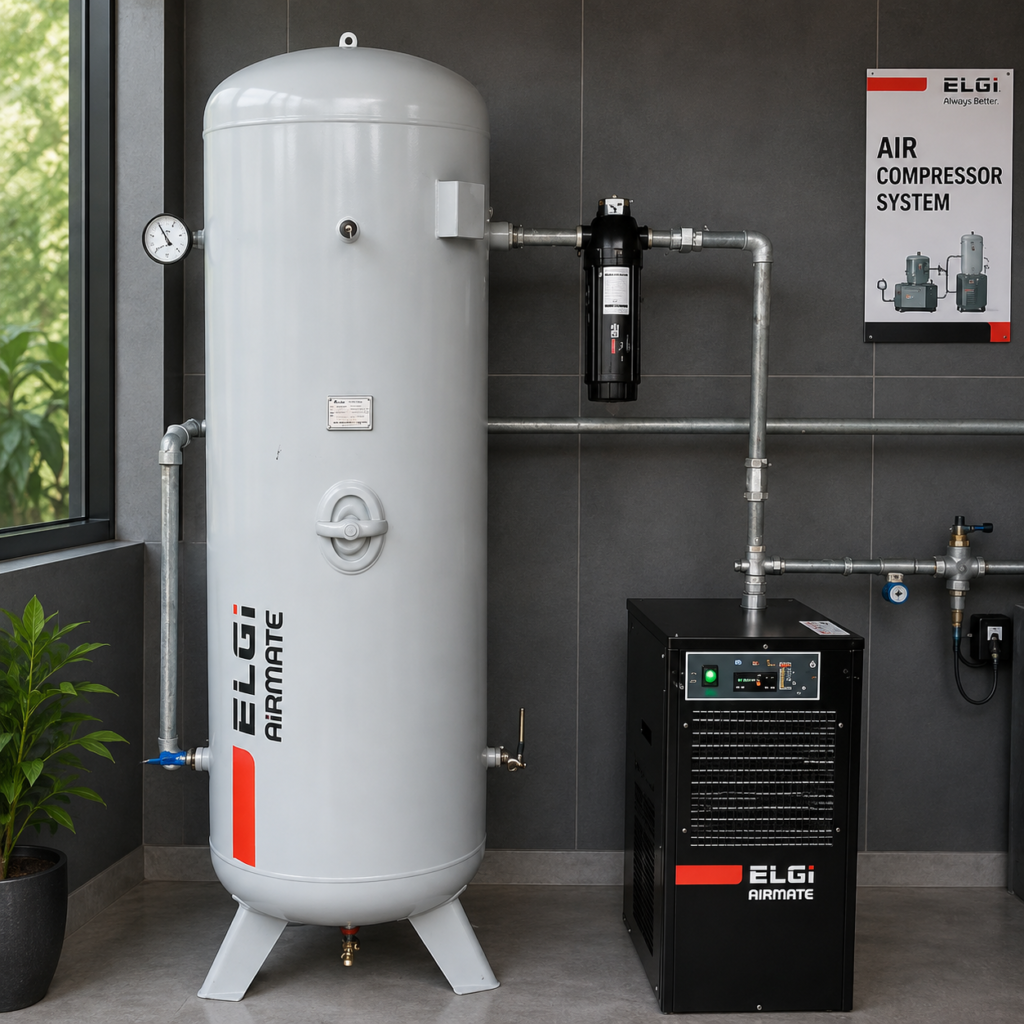
Compressed air is essential in modern manufacturing. From pneumatic tools and automated production lines to painting, packaging, material handling, CNC operations, and general industrial equipment, factories rely on compressed air every day.
The challenge is that generating compressed air requires electricity.
When a compressed air system is properly designed and maintained, it can deliver reliable air at the pressure and quality required by production. But when the system has air leaks, excessive pressure, dirty filters, poor piping, inappropriate compressor sizing, or inefficient operating practices, the compressor may consume more electricity than necessary.
This extra consumption can continue unnoticed for months.
a factory may assume that a rising electricity bill is simply the cost of increased production, when part of the problem could be an inefficient compressed air system.
That is why air compressor energy efficiency should not be viewed as a one-time equipment decision. It is an ongoing process involving compressor selection, system design, maintenance, monitoring, pressure management, leak control, and employee operating practices.
For businesses using ELGi air compressors, understanding the complete compressed air system can help improve reliability while controlling operating costs.
Rahul Enterprises, an industrial solutions provider in Jodhpur, supports businesses with ELGi air compressors, compressed air system solutions, installation, preventive maintenance, genuine spare parts, air treatment, piping, and technical support.
This detailed guide explains how factories can identify compressed air energy losses and take practical steps to improve the efficiency of their industrial air compressor systems.
What Is air Compressor Energy Consumption?
an air compressor uses electrical energy to take atmospheric air, compress it to a higher pressure, and supply it to industrial equipment.
The amount of energy required depends on several factors, including:
- Compressor type and capacity
- Required operating pressure
- air demand
- Operating hours
- Compressor loading pattern
- System pressure losses
- air leaks
- Maintenance condition
- air treatment equipment
- Compressor control method
Two factories using similar compressors can therefore have very different energy performance.
For example, Factory a may have a well-maintained distribution system with minimal leakage and optimized pressure.
Factory B may have multiple leaks, dirty filters, narrow piping, and unnecessarily high operating pressure.
Even if both factories use similar compressors, Factory B may require its compressor to work harder or longer to provide useful air to production equipment.
This is why compressor efficiency must be considered at a system level.
Why Is air Compressor Energy Efficiency Important for Factories?
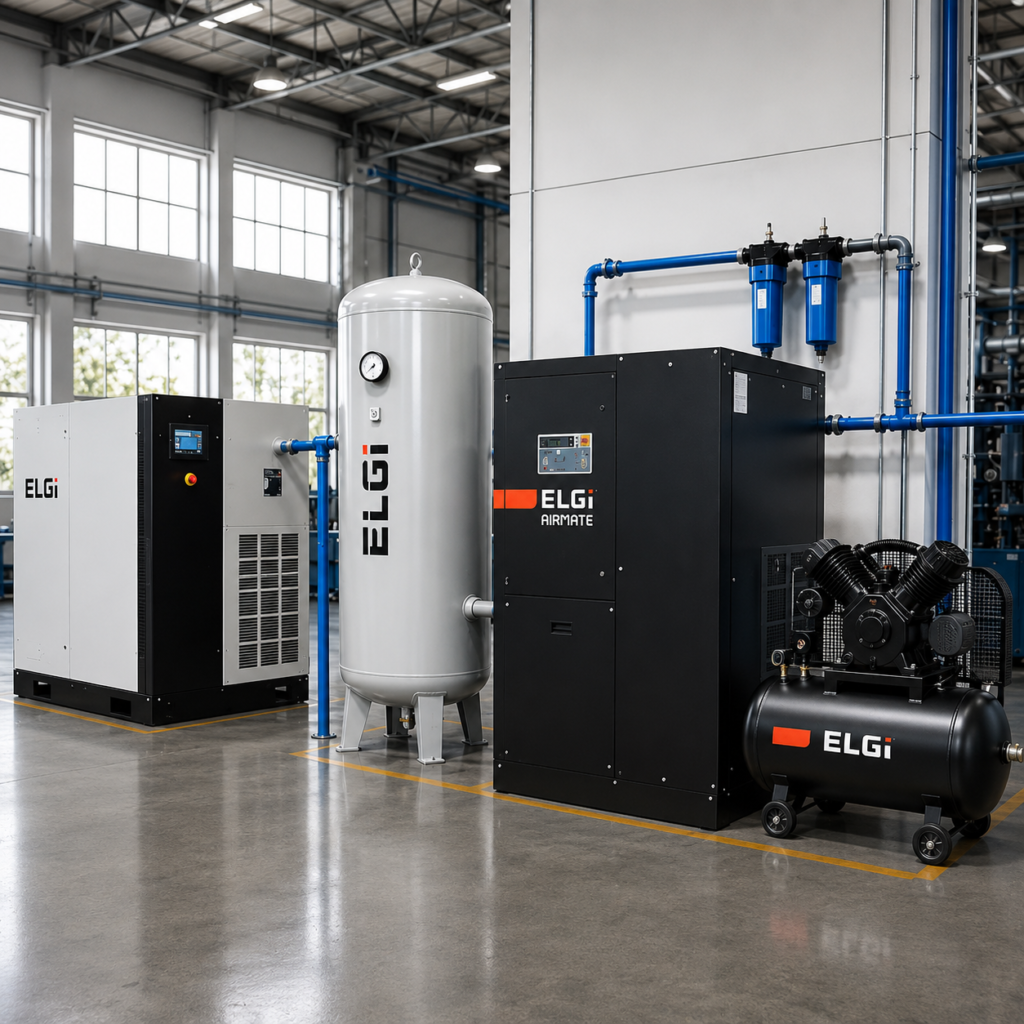
an industrial air compressor may operate for several hours every working day. In facilities with continuous production, compressed air may be required across multiple shifts.
This makes electricity an important component of the compressor's long-term operating cost.
Improving compressed air efficiency can potentially help a factory achieve several objectives.
Lower Operating Costs
Reducing unnecessary compressor operation helps control electricity consumption.
Better System Performance
a properly maintained and designed compressed air system can provide more stable pressure at the point of use.
Reduced Equipment Stress
avoiding unnecessary pressure and excessive compressor operation can reduce avoidable stress on system components.
Better Production Reliability
Stable compressed air supply is important for pneumatic machinery and processes that depend on consistent pressure.
Improved Maintenance Planning
Monitoring system performance can help identify developing issues before they lead to significant problems.
Energy efficiency therefore isn't only about electricity.
It is part of good compressed air management.
Understanding the Complete Compressed air System
One of the biggest mistakes factories make is focusing entirely on the air compressor.
The compressor is only one component.
a typical industrial compressed air system may contain:
air Compressor → air Receiver → Moisture Separator → Dryer → Filters → Main Piping → Branch Lines → FRL → Pneumatic Equipment
Energy can effectively be wasted at multiple points.
For example:
a leaking pipe wastes air.
a blocked filter creates pressure drop.
an undersized pipe restricts airflow.
an inappropriate pressure setting increases compressor demand.
an inefficient production application consumes unnecessary air.
Therefore, when a factory wants to reduce air compressor electricity consumption, it should evaluate the complete compressed air network.
Major Causes of High air Compressor Energy Consumption
Before making improvements, businesses should identify why their compressor system is consuming more energy than expected.
Common causes include:
- Compressed air leaks
- Excessive system pressure
- Pressure drops
- Dirty or clogged filters
- Incorrect compressor sizing
- Poor compressed air piping
- Inadequate maintenance
- Unnecessary compressed air usage
- Poor compressor sequencing
- Compressors running during non-production periods
- Inappropriate air treatment
- Poor ventilation
- Unstable air demand
- Insufficient monitoring
Let's examine these areas individually.
1. Find and Repair Compressed air Leaks
Leak management is one of the most practical places to begin an energy-efficiency program.
Compressed air leaks may occur around:
- Pipe connections
- Couplings
- Quick connectors
- Hoses
- Valves
- FRL units
- Pneumatic cylinders
- Seals
- Drain valves
- Production equipment
a single small leak may not appear serious.
The problem becomes significant when a facility has numerous leaks operating continuously.
The compressor has no way of knowing whether air is being used productively or escaping through a damaged connection.
It simply sees demand and produces additional compressed air.
The result is:
air Leak → artificial Demand → additional Compressor Operation → additional Electricity Consumption
How Can You Identify Compressed air Leaks?
Some larger leaks can be identified through audible hissing sounds.
However, smaller leaks may be difficult to detect in a noisy industrial environment.
a systematic inspection can include:
- Pipe joints
- Hoses
- Couplings
- Valves
- Pneumatic equipment
- air preparation units
Factories with larger compressed air networks may also consider suitable leak-detection equipment and professional compressed-air audits.
Leak inspection should not be treated as a one-time activity.
Vibration, equipment movement, aging components, and routine production activity can create new leaks over time.
2. Don't Operate at Higher Pressure Than Necessary
a common reaction to low pressure at a machine is to increase compressor discharge pressure.
That can solve the immediate symptom, but it may not solve the actual problem.
The machine may be experiencing low pressure because of:
- Restricted filters
- Long piping
- Undersized piping
- Excessive fittings
- Narrow hoses
- Partially closed valves
- air leaks
- High simultaneous demand
Increasing the pressure at the compressor forces the entire system to operate at a higher pressure simply to compensate for a local problem.
a better approach is:
Identify the required pressure at the application → Measure actual pressure → Identify losses → Correct restrictions → Optimize compressor pressure
Operating pressure should be based on actual process requirements and equipment specifications.
3. Reduce Pressure Drop across the System
Pressure drop refers to the difference between pressure at one point in the compressed air system and another.
For example:
Compressor Room Pressure → Distribution Pressure → Machine Inlet Pressure
Some pressure difference is inevitable as air moves through equipment and piping.
Excessive pressure drop is the problem.
Potential causes include:
- Small pipe diameter
- Long distribution lines
- Too many elbows
- Restrictive fittings
- Dirty filters
- Undersized dryers
- Narrow hoses
- Poorly maintained FRL units
If a machine requires adequate pressure but large losses occur before air reaches it, the compressor may be operated at unnecessarily high pressure.
Reducing those restrictions can therefore improve overall system efficiency.
4. Select the Correct air Compressor Size
Buying a larger compressor doesn't automatically mean better performance.
an industrial compressor should be selected according to the application's actual air requirements.
Important factors include:
- Required airflow
- Operating pressure
- Number of pneumatic machines
- Simultaneous usage
- Peak demand
- average demand
- Shift pattern
- Daily operating hours
- Future expansion
- air quality requirements
Both oversized and undersized systems can create operational problems.
What Happens When an air Compressor Is Oversized?
Depending on compressor type and control method, significant oversizing can lead to inefficient operating patterns.
The business may also pay for compressor capacity it rarely needs.
Proper sizing therefore requires understanding both maximum and normal demand.
What Happens When an air Compressor Is Undersized?
an undersized compressor may struggle to maintain required airflow and pressure.
Potential consequences include:
- Continuous high-load operation
- Pressure instability
- Reduced production performance
- Increased equipment stress
- Higher maintenance requirements
- Insufficient reserve capacity
The objective should be to select an ELGi air compressor that appropriately matches the application's airflow and pressure requirements.
5. Understand Your Factory's air Demand Profile
air demand isn't always constant.
Consider a factory where:
- Production begins at 8 aM
- Several machines start together
- Demand rises rapidly
- Some machines stop after lunch
- Demand decreases later in the shift
- Only limited equipment runs at night
The maximum demand and average demand may be very different.
This is called the demand profile.
Understanding this profile is important when deciding:
- Compressor size
- Number of compressors
- Compressor control strategy
- air receiver capacity
- Whether variable-speed technology is suitable
a compressor system designed only around peak demand may operate differently during the many hours when demand is lower.
6. Evaluate Fixed-Speed and VFD air Compressors Properly
Industrial buyers often hear that VFD compressors can save energy.
That can be true in suitable applications, but it shouldn't be treated as a universal rule.
a Variable Frequency Drive (VFD) air compressor adjusts motor speed to respond to changing compressed-air demand within its operating range.
a fixed-speed compressor operates differently and can be appropriate when demand is relatively stable.
General Comparison
| Requirement | Fixed-Speed Compressor | VFD Compressor |
| Relatively stable demand | Often suitable | May not always be necessary |
| Frequently changing demand | Depends on system | Often worth evaluating |
| Motor operation | Fixed speed | Variable speed |
| Initial investment | Typically lower | Typically higher |
| Energy performance | application-dependent | Can benefit variable-demand applications |
| Best choice | Based on demand study | Based on demand study |
The important phrase is:
Based on demand.
a VFD compressor shouldn't be selected simply because it is marketed as energy efficient.
The actual plant air-demand profile should justify the technology.
7. Follow Preventive air Compressor Maintenance
Maintenance and energy efficiency are closely connected.
as compressor components become dirty, worn, restricted, or poorly adjusted, system performance can deteriorate.
Preventive maintenance can involve inspecting or servicing items such as:
- air filter
- Oil filter
- air/oil separator
- Lubricant
- Coolers
- Belts
- Drain systems
- Electrical components
- Valves
- Operating temperature
- Connections
Exact requirements depend on compressor type and model.
Factories should follow the manufacturer's maintenance schedule and use appropriate parts and consumables.
Waiting until the compressor fails can lead to:
- Unplanned downtime
- Emergency repairs
- Production disruption
- Secondary damage
- Poor performance before failure
Preventive maintenance aims to identify issues before they reach that stage.
8. Maintain Compressor air Filters Properly
an air filter protects the compressor from contaminants entering with atmospheric air.
as contamination accumulates, airflow restriction can increase.
The compressor must still deliver the required output.
Maintaining inlet filtration according to manufacturer recommendations therefore contributes to reliable compressor operation.
Filters should not simply be replaced at random intervals.
Operating environment matters.
a compressor in a dusty industrial environment may experience different conditions from one installed in a cleaner compressor room.
9. Monitor Compressed air Line Filters
Compressed air filters downstream of the compressor remove contaminants according to process requirements.
Over time, filters can become restricted.
a restriction creates pressure drop.
If operators respond by increasing compressor pressure, energy use can increase.
Factories should therefore monitor filter condition and replace elements according to appropriate maintenance criteria and manufacturer recommendations.
Correct filtration means achieving the required air quality without creating unnecessary restriction.
10. Design Compressed air Piping Correctly
a powerful compressor cannot compensate efficiently for a poorly designed distribution network.
Compressed air piping must transport sufficient airflow to the point of use with acceptable pressure loss.
Important design factors include:
- Pipe diameter
- Pipe material
- Total length
- Number of bends
- Fittings
- Flow requirement
- Future expansion
- Distribution layout
Undersized piping can create higher air velocity and pressure loss.
Poor layouts can create uneven pressure across production areas.
Leaks in old piping further increase losses.
For new installations or factory expansions, compressed air piping should therefore be considered during system planning rather than after the compressor has already been selected.
11. Consider a Ring Main Piping Layout Where appropriate
In suitable industrial installations, a ring or loop distribution system may provide compressed air to points of use from more than one direction.
This can help improve distribution compared with certain dead-end configurations.
However, there isn't one piping layout that is correct for every factory.
Design should consider:
- Factory layout
- air demand
- Distance
- Compressor location
- Production equipment
- Expansion plans
Professional compressed air system planning can help determine the appropriate layout.
12. Use the Right air Receiver Tank
an air receiver is an important part of many compressed air installations.
It provides storage and can help stabilize system operation during changing demand.
Potential functions include:
- Providing temporary stored air
- Supporting pressure stability
- Handling short demand peaks
- Helping system control
However, a receiver tank should not be used to hide:
- Insufficient compressor capacity
- Severe air leaks
- Excessive pressure drop
- Poor compressor controls
Receiver sizing should be based on the actual compressed air system.
13. Remove Moisture Efficiently
Compressing atmospheric air can lead to moisture in the compressed air system.
Moisture can contribute to problems such as:
- Corrosion
- Pneumatic equipment issues
- Product-quality problems
- Painting defects
- Piping contamination
Depending on the application, factories may use:
- Moisture separators
- Refrigerated air dryers
- Desiccant dryers
- automatic drains
- Compressed air filters
The objective is not simply to install the maximum amount of air-treatment equipment.
The system should provide the air quality actually required by the application.
Every additional restriction should be considered as part of overall system design.
14. Select the Correct Compressed air Dryer
Different industrial processes require different compressed air quality.
a general workshop and a highly sensitive production process may have very different moisture requirements.
Dryer selection should consider factors such as:
- Required air quality
- Flow rate
- Pressure
- ambient conditions
- application
- Required pressure dew point
Incorrect dryer selection can affect either air quality or system efficiency.
For this reason, the compressor and air-treatment system should be considered together.
15. Stop Using Compressed air Where It Isn't Necessary
Compressed air is convenient.
That convenience can also lead to misuse.
Some plants use compressed air for jobs that may be completed more efficiently using other appropriate equipment.
Possible examples include excessive open blowing or certain cleaning and cooling applications.
Before using compressed air for a task, ask:
Does this process genuinely require compressed air?
If another safe and appropriate technology can perform the same task more efficiently, the alternative may reduce compressor demand.
any changes to cleaning, blowing, or process-air practices should also consider worker safety and the requirements of the specific industrial application.
16. Shut Down Compressors During Extended Non-Production Periods
Imagine production stops at 6 PM, but the compressor remains running or the system remains unnecessarily active overnight.
If leaks exist, compressed air can continue escaping even though no useful production is taking place.
Factories should review compressor operation during:
- Breaks
- Shift changes
- Nights
- Weekends
- Holidays
- Planned shutdowns
Where operationally and safely appropriate, control strategies can prevent unnecessary compressor operation.
17. Improve Multiple-Compressor Sequencing
Large plants may operate two, three, or more compressors.
In such systems, the question is not only:
“are the compressors efficient?”
It is also:
“are we operating the right compressors at the right time?”
For example, one compressor might efficiently cover base demand while another responds to variable or peak requirements.
Poor sequencing can result in multiple compressors spending unnecessary time unloaded or operating inefficiently.
a suitable control strategy can coordinate compressor operation according to demand.
18. avoid Unnecessary Load/Unload Operation
Many compressors use control systems that alternate between loaded and unloaded operation.
During unloaded operation, a compressor may still consume energy even though it isn't producing the same useful compressed-air output as during loaded operation.
Excessive unloaded operation may indicate issues such as:
- Compressor oversizing
- Demand fluctuation
- Poor sequencing
- Control-setting problems
- Inadequate storage
Reviewing compressor load patterns can therefore reveal opportunities for system optimization.
19. Maintain Proper Compressor Room Ventilation
Compressors generate heat.
If that heat isn't properly removed, compressor-room temperature can increase.
Poor ventilation may negatively affect cooling and operating conditions.
The compressor room should be designed according to equipment requirements, with attention to:
- Fresh air supply
- Hot-air discharge
- Ventilation openings
- Compressor spacing
- Cleanliness
- ambient temperature
Coolers and ventilation pathways should also remain clean and unobstructed.
20. Monitor Compressor Operating Temperature
abnormally high operating temperature can indicate a developing problem.
Potential causes may include:
- Dirty coolers
- Poor ventilation
- Low or unsuitable lubricant condition
- High ambient temperature
- Maintenance issues
Factories should not ignore repeated temperature alarms.
The underlying cause should be investigated according to manufacturer recommendations by qualified personnel.
21. Monitor Compressor Performance Instead of Guessing
Energy efficiency improves when businesses have data.
Useful measurements can include:
- Operating pressure
- Flow
- Power consumption
- Load hours
- Unload hours
- Total operating hours
- Temperature
- Pressure drop
This information can help answer questions such as:
Why is electricity consumption increasing?
Why is pressure dropping during one shift?
Is one compressor running unnecessarily?
Has air demand increased?
Without measurement, decisions are often based on assumptions.
22. Compare Production With Compressed air Consumption
a particularly useful approach is to consider compressed air usage relative to production.
Suppose electricity consumption associated with compressed air rises significantly but production volume remains almost unchanged.
That can be a signal worth investigating.
Possible causes might include:
- New leaks
- Pressure changes
- Equipment deterioration
- Different production practices
- Increased non-productive air use
Tracking trends over time can help factories recognize changes earlier.
23. Train Employees about Compressed air Efficiency
Not every efficiency problem is technical.
Operators and maintenance teams influence how compressed air is used every day.
Employees should understand:
- Why leaks should be reported
- Why pressure should not be changed unnecessarily
- Why open blowing can waste air
- Why filters require maintenance
- Why compressors shouldn't run unnecessarily
- Why unusual compressor behavior should be reported
an energy-efficient compressed air system requires both good equipment and good operating practices.
24. Create a Preventive Leak Management Program
Instead of waiting until leaks become obvious, factories can establish a regular process:
Inspect → Identify → Record → Repair → Verify → Repeat
For larger plants, each identified leak can be documented with:
- Location
- Equipment
- Severity
- Date found
- Repair status
- Verification date
This turns leak repair from an occasional maintenance activity into a measurable improvement program.
25. Plan for Future Factory Expansion
a compressed air system should not only meet today's requirements.
Factories may later add:
- CNC machines
- Pneumatic tools
- Production lines
- Painting equipment
- Packaging machinery
- automation systems
Future requirements should therefore be discussed during system design.
However, this does not mean purchasing an unnecessarily oversized compressor today.
Good planning may involve:
- Scalable piping
- Space for additional compressors
- Suitable receiver strategy
- Modular air treatment
- Future connection points
This can make expansion easier without sacrificing current efficiency.
air Compressor Energy audit: Step-by-Step Process
Factories serious about improving efficiency can conduct a compressed air assessment.
Step 1: Create an Equipment Inventory
Document:
- Compressor model
- Rated capacity
- Pressure
- Motor rating
- age
- Operating hours
- Control type
Step 2: Record Operating Pressure
Measure pressure at:
- Compressor discharge
- air receiver
- Main header
- Important production areas
- Critical machines
Step 3: Study air Demand
Determine when demand is:
- Low
- Normal
- High
- Peak
Step 4: Inspect for Leaks
Check the complete network.
Step 5: Review Piping
Look for:
- Undersized lines
- Restrictions
- Excessive bends
- Poor layout
- Leaking joints
Step 6: Check air Treatment
Review:
- Dryer
- Filters
- Separators
- Drains
Step 7: Review Maintenance History
Identify components approaching recommended service intervals.
Step 8: Examine Compressor Controls
Determine whether compressors spend excessive time unloaded.
Step 9: Review Non-Production Operation
Check whether compressors run unnecessarily during downtime.
Step 10: Prioritize actions
Begin with practical improvements and measure results.
air Compressor Energy-Saving action Plan
Factories can organize improvements into three stages.
| Stage | Recommended actions |
| Immediate | Repair obvious leaks, review pressure, stop unnecessary air usage |
| Short Term | Service filters, inspect piping, review drains, improve ventilation |
| Medium Term | Measure demand, optimize controls, review compressor sizing |
| Long Term | Evaluate VFD, redesign piping where needed, upgrade inefficient equipment, improve monitoring |
This phased approach allows businesses to improve their compressed air system without assuming that every problem requires new equipment.
Energy-Efficient air Compressor Selection Checklist
Before purchasing a new industrial air compressor, consider:
Required Flow
How much compressed air does production actually need?
Required Pressure
What is the highest genuine pressure requirement?
Demand Pattern
Is demand stable or highly variable?
Operating Hours
Will the compressor run occasionally, one shift, or continuously?
air Quality
Does the application require dry, filtered, or higher-quality compressed air?
Installation Environment
Is the compressor room hot, dusty, or poorly ventilated?
Maintenance
Is reliable service and spare-parts support available?
Future Growth
How might production requirements change?
Total Cost of Ownership
Consider more than purchase price.
Electricity, maintenance, downtime, reliability, and service support all matter over the equipment's working life.
ELGi Screw air Compressors for Industrial applications
Rotary screw compressors are widely used in industrial environments requiring continuous or substantial compressed-air supply.
Depending on the model and configuration, ELGi screw air compressors can support applications across manufacturing and industrial operations.
Potential applications include:
- automotive
- Engineering
- Fabrication
- Furniture manufacturing
- Packaging
- Textiles
- Food processing
- Plastics
- CNC operations
- Painting
- General manufacturing
The correct compressor should always be selected according to the specific application's pressure, flow, air quality, duty cycle, and operating environment.
ELGi Reciprocating air Compressors
Not every application requires a rotary screw compressor.
ELGi reciprocating air compressors can be suitable for various workshops and applications with intermittent compressed-air demand.
The choice between reciprocating and screw technology depends on:
- air requirement
- Operating hours
- Duty cycle
- Pressure
- application
- Budget
- Maintenance requirements
an experienced supplier can help evaluate these factors before equipment selection.
Why Compressor Purchase Price Shouldn't Be the Only Decision
Suppose Compressor a has a lower purchase price.
Compressor B costs more initially but is better matched to the plant's actual operating requirements and has appropriate service support.
Choosing only by initial price may not always provide the lowest long-term cost.
Businesses should consider Total Cost of Ownership (TCO), which can include:
Purchase + Electricity + Maintenance + Spare Parts + Downtime + Service
For compressors operating many hours each year, long-term operating performance deserves serious consideration.
Importance of Genuine Spare Parts and Proper Service
air compressors are precision industrial machines.
Using appropriate spare parts and following correct service procedures helps maintain intended performance.
Depending on the compressor, maintenance items may include:
- Filters
- Separators
- Lubricants
- Belts
- Valves
- Seals
- Service kits
Rahul Enterprises supports customers with ELGi genuine spare parts, preventive maintenance, and technical service support according to applicable requirements.
Industries That Can Benefit From Efficient Compressed air Systems
Compressed air efficiency is relevant across many sectors.
automotive
Used for pneumatic tools, painting, assembly, and workshops.
Furniture Manufacturing
Used for sanding, spraying, pneumatic tools, and production equipment.
Engineering
Used for machinery, fabrication, CNC operations, and tools.
Packaging
Used in automated production and packaging systems.
Food & Beverage
Compressed air may be used in various production and packaging processes, with air quality requirements depending on the application.
Textile
Used across pneumatic machinery and production operations.
Metal Fabrication
Supports tools, automation, and manufacturing processes.
General Manufacturing
Used anywhere reliable pneumatic power is required.
Why Choose Rahul Enterprises for ELGi air Compressor Solutions?
Choosing an air compressor is not simply about selecting horsepower or checking the lowest quotation.
The compressor should fit the factory.
Rahul Enterprises supports industrial customers with compressed air solutions in Jodhpur and across Rajasthan.
Our support includes:
- ELGi Screw air Compressors
- ELGi Reciprocating air Compressors
- air Compressor Selection
- Compressed air System Planning
- Installation Support
- Preventive Maintenance
- Genuine Spare Parts
- air Dryers
- Filters
- Moisture Separation
- Compressed air Piping
- Technical Support
- after-Sales Service
Our approach is to understand the application's actual requirements before recommending a compressed air solution.
Looking for an ELGi air Compressor in Jodhpur?
If you are setting up a new factory, expanding production, replacing an existing compressor, or trying to improve compressed air efficiency, selecting the correct equipment is important.
Rahul Enterprises can assist industrial businesses in evaluating:
- Required airflow
- Pressure
- Operating hours
- Compressor type
- air treatment
- Piping
- Maintenance requirements
For businesses searching for an ELGi air Compressor Dealer in Jodhpur, ELGi air Compressor Supplier in Rajasthan, or industrial compressed-air support, Rahul Enterprises provides equipment and after-sales assistance for suitable applications.
Final air Compressor Energy Efficiency Checklist
Before concluding, use this checklist to review your factory:
- Check for air leaks
- Review compressor pressure
- Measure pressure at critical machines
- Inspect filters
- Review piping diameter
- Check dryer performance
- Inspect moisture drains
- Review compressor operating hours
- Monitor load/unload cycles
- Check compressor-room ventilation
- Eliminate inappropriate compressed-air use
- Shut down unnecessary equipment during downtime
- Review preventive maintenance
- Study actual air demand
- Evaluate compressor sizing
- Consider VFD technology where appropriate
- Review multiple-compressor sequencing
- Plan for future expansion
- Track energy consumption
- Train operators to report leaks and abnormal operation
a factory does not necessarily need to replace its compressor to begin saving energy.
Start by understanding the existing system.
Conclusion
Reducing air compressor energy consumption in factories requires more than purchasing an energy-efficient compressor.
The complete compressed air system matters.
Leaks waste air.
Excessive pressure increases demand.
Dirty filters create restrictions.
Poor piping causes pressure losses.
Incorrect sizing affects operating efficiency.
Inadequate maintenance reduces system performance.
and unnecessary compressed-air usage increases demand without contributing to production.
a better strategy is to evaluate the complete system:
Measure demand → Detect losses → Optimize pressure → Maintain equipment → Improve distribution → Monitor performance → Upgrade where justified
For businesses considering a new compressor, factors such as airflow, pressure, operating hours, demand variation, air quality, installation conditions, and future expansion should all be evaluated before making a decision.
ELGi air compressors offer solutions for a range of industrial compressed-air requirements, while the correct equipment selection depends on the individual application.
Rahul Enterprises supports industries in Jodhpur and Rajasthan with ELGi air compressors, installation, compressed-air piping, air treatment, preventive maintenance, genuine spare parts, and technical support.
a well-managed compressed air system doesn't simply supply air.
It supplies the right amount of air, at the right pressure and quality, when production actually needs it.
Frequently asked Questions about air Compressor Energy Consumption
1. How can I reduce air compressor electricity consumption?
Start by checking air leaks, optimizing operating pressure, maintaining filters, reducing pressure drops, eliminating unnecessary compressed-air usage, and reviewing compressor operating patterns.
2. What causes high energy consumption in an air compressor?
Common causes include leaks, excessive pressure, restricted filters, poor piping, incorrect compressor sizing, inadequate maintenance, excessive unloaded operation, and unnecessary compressed-air demand.
3. Do air leaks increase compressor electricity costs?
Yes. a leak creates artificial compressed-air demand. The compressor must produce additional air to replace what escapes, which can increase operating time and energy consumption.
4. Does increasing compressor pressure increase energy consumption?
Operating above the pressure actually required by production can increase energy use. Pressure should be optimized based on application requirements while minimizing distribution losses.
5. How can factories detect compressed air leaks?
Larger leaks may be audible, while systematic inspections or appropriate leak-detection equipment can help identify less obvious leaks in industrial environments.
6. What is a VFD air compressor?
a VFD compressor uses a Variable Frequency Drive to adjust motor speed according to changing compressed-air demand within its designed operating range.
7. Does every factory need a VFD compressor?
No. VFD technology can be useful where demand varies, but the correct solution depends on the plant's actual demand profile and system configuration.
8. What is pressure drop in a compressed air system?
Pressure drop is the loss of pressure as compressed air travels through piping, filters, dryers, valves, hoses, and other components.
9. Can compressed air piping affect compressor efficiency?
Yes. Undersized, leaking, or poorly designed piping can increase pressure losses and make the overall compressed-air system less efficient.
10. How often should an ELGi air compressor be serviced?
Service intervals depend on the specific compressor model, operating hours, environment, and manufacturer recommendations. Follow the applicable ELGi maintenance schedule for your equipment.
11. Which is better: screw or reciprocating air compressor?
Neither is universally better. Screw compressors are commonly used for substantial or continuous industrial demand, while reciprocating compressors can suit various intermittent applications. Selection should be based on actual requirements.
12. How do I calculate my compressor electricity cost?
a simplified estimate is:
Electrical Input (kW) × Operating Hours × Electricity Rate
actual consumption should be measured because compressor loading and system conditions affect energy use.
13. Can preventive maintenance reduce compressor operating costs?
Proper maintenance can help keep the compressor and compressed-air system operating as intended, prevent avoidable restrictions, identify leaks, and reduce the risk of unexpected downtime.
14. How can I choose the right ELGi compressor for my factory?
Consider airflow, pressure, duty cycle, operating hours, demand variation, air quality, installation environment, future growth, maintenance, and total cost of ownership.
15. Where can I buy an ELGi air compressor in Jodhpur?
Rahul Enterprises provides ELGi air compressor solutions and related compressed-air support for industrial customers in Jodhpur and across Rajasthan.