How to Choose the Right air Compressor for Furniture Manufacturing
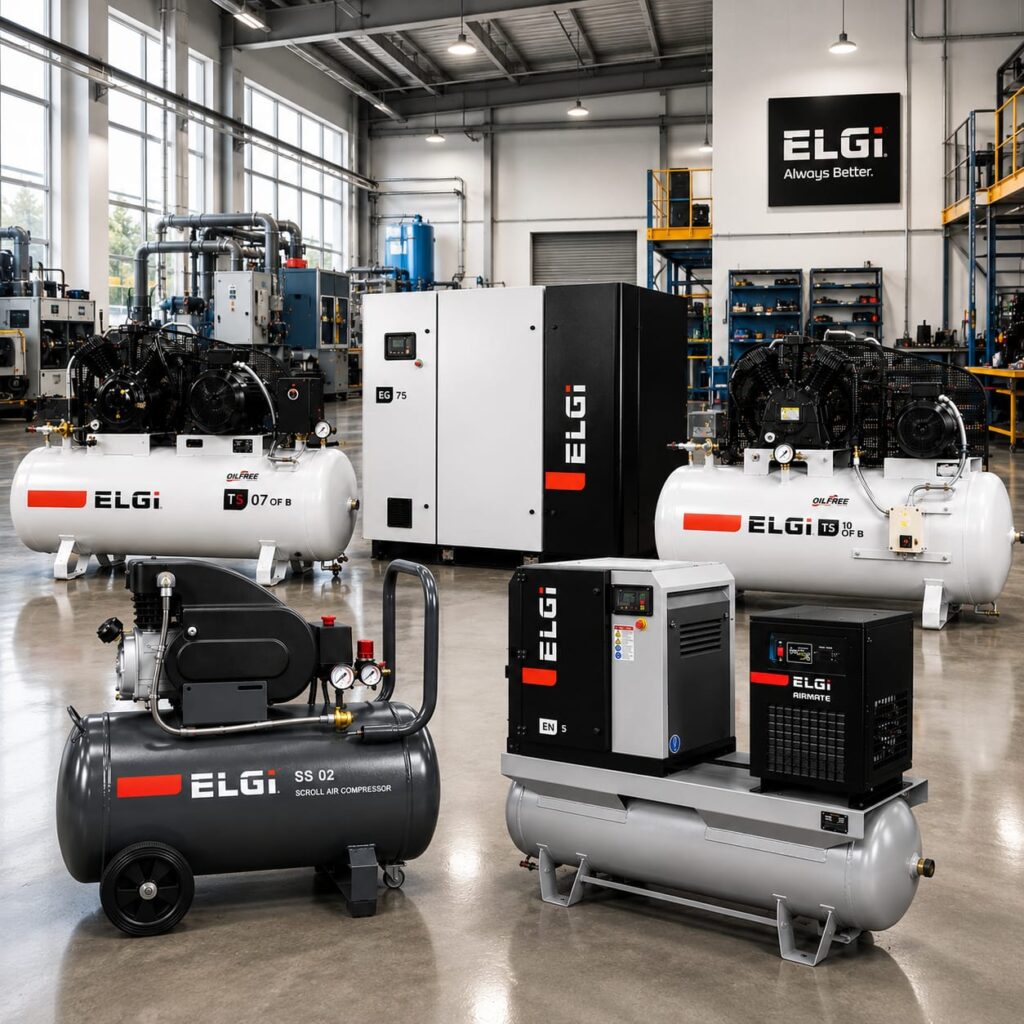
Furniture manufacturing is a precision-driven industry where productivity, finishing quality, and equipment performance play an important role in business success. From small woodworking workshops to large-scale furniture production units, manufacturers depend on reliable machinery to complete their operations efficiently.
One essential piece of equipment in modern furniture manufacturing is the air compressor.
Compressed air powers several important tools and processes, including pneumatic nail guns, orbital sanders, spray-painting equipment, pneumatic clamps, and certain CNC woodworking machines.
However, selecting the right air compressor for furniture manufacturing is not as simple as choosing a machine with higher horsepower or a larger air tank.
Different furniture workshops have different compressed-air requirements. a small workshop producing customized wooden furniture may need an intermittent compressed-air supply, while a larger manufacturing facility operating multiple pneumatic machines may require continuous airflow throughout the working day.
Choosing an undersized compressor can result in pressure drops, reduced equipment performance, and production interruptions. On the other hand, an oversized compressor can increase investment and operating costs unnecessarily.
So, how do you choose the right air compressor for your furniture manufacturing business?
In this guide, Rahul Enterprises, an authorised ELGi air compressor dealer in Jodhpur, Rajasthan, explains the important factors to consider when selecting an industrial air compressor for woodworking and furniture production.
Why are air Compressors Essential in Furniture Manufacturing?
Compressed air is widely used in furniture manufacturing because it provides a practical power source for pneumatic tools and automated equipment.
a correctly designed compressed-air system can support consistent equipment operation, efficient production, and reliable manufacturing processes.
1. Pneumatic Nail Guns and Staplers
Pneumatic nail guns and staplers are commonly used for assembling wooden furniture, fixing panels, constructing frames, and performing upholstery work.
These tools typically require short bursts of compressed air rather than continuous airflow.
The compressor must provide sufficient pressure and replenish the air consumed during repeated operation.
2. Pneumatic Orbital Sanders
Orbital sanders are used for preparing wooden surfaces before painting, polishing, and finishing.
Many pneumatic sanders consume compressed air continuously while operating.
a workshop using several pneumatic sanders simultaneously may require substantially more compressor capacity than a workshop operating only nail guns.
3. Spray Painting and Furniture Finishing
Compressed air is used in conventional and certain air-assisted spray systems for applying primers, paints, lacquers, and other coatings.
a stable air supply helps spray equipment operate consistently.
air quality is also important because moisture, oil aerosols, and particles can affect finishing processes.
4. Pneumatic Clamping Systems
Pneumatic clamps help secure wooden components during manufacturing and assembly.
These systems generally require compressed air during clamping and release cycles, although actual demand depends on the equipment.
5. CNC Woodworking Machines
Some CNC woodworking machines use compressed air for automatic tool changes, pneumatic actuators, and other machine functions.
Their airflow and pressure requirements should be checked against the machine manufacturer's specifications.
6. automated Furniture Production Lines
Larger furniture manufacturing facilities may use compressed air across multiple production stations.
These systems require careful planning to maintain adequate pressure and airflow throughout the facility.
Step 1: Understand Your Furniture Workshop's air Requirements
Before purchasing an air compressor, the first step is understanding how your workshop uses compressed air.
Different furniture manufacturing operations have different demand patterns.
For example, a workshop using a pneumatic nail gun occasionally will have different requirements from a factory operating several orbital sanders throughout an eight-hour shift.
Identify Every Pneumatic Tool
Prepare a list of equipment that requires compressed air.
Typical equipment includes:
- Pneumatic nail guns
- Pneumatic staplers
- Orbital sanders
- Spray guns
- Pneumatic clamps
- CNC woodworking machines
- air blow guns
- Other automated pneumatic equipment
Determine How Frequently Each Tool Operates
Consider whether the tools are used:
- Occasionally
- Several times per hour
- For extended periods
- Continuously during production
This information helps determine the compressor's required duty cycle.
Check Simultaneous Equipment Usage
Not every machine necessarily operates at the same time.
However, if several pneumatic tools operate simultaneously, their combined airflow demand must be considered.
For accurate compressor selection, calculate realistic peak demand rather than simply adding every installed tool without considering how it is used.
Step 2: Calculate the Required airflow (CFM)
One of the most important factors in choosing an air compressor for furniture manufacturing is airflow.
airflow is commonly measured in CFM (cubic feet per minute) or litres per minute.
It indicates the volume of compressed air the equipment requires.
Why Is CFM Important?
a compressor must deliver enough airflow to support the pneumatic tools operating in your workshop.
If the compressor cannot meet demand, system pressure may fall during operation.
This can affect equipment performance and interrupt production.
Example: air Compressor CFM Calculation for a Furniture Workshop
Consider a furniture workshop using the following equipment.
| Equipment | Illustrative airflow Requirement |
| Pneumatic Orbital Sander | 12 CFM |
| Spray Gun | 10 CFM |
| Pneumatic Nail Gun | 3 CFM |
| Pneumatic Clamping Equipment | 5 CFM |
| Total Simultaneous air Demand | 30 CFM |
If all four loads can operate simultaneously, the estimated peak demand is 30 CFM.
Suppose an additional 20% allowance is appropriate for demand variations and reasonable expansion.
Required airflow = 30 CFM × 1.20
Estimated airflow requirement = 36 CFM
The workshop could begin evaluating compressors capable of delivering approximately 36 CFM at the required operating pressure.
These figures are illustrative, not standard airflow ratings for the listed tools. actual requirements must come from equipment specifications, with attention to duty cycle, pressure, and how CFM is defined.
Important Compressor Sizing Tip
always compare the compressor's rated delivered airflow at the required pressure.
Do not select a compressor based only on horsepower or tank capacity.
Step 3: Determine the Required air Pressure (PSI or Bar)
air pressure is another important factor in compressor selection.
Pressure is commonly measured in PSI (pounds per square inch) or bar.
Different pneumatic tools require different operating pressures.
For example, pneumatic nail guns, spray guns, sanders, and CNC equipment may have different pressure requirements.
Why Correct air Pressure Matters
Insufficient pressure can affect equipment performance.
Excessive pressure may increase electricity consumption and create unnecessary stress on equipment.
The correct operating pressure should be based on the requirements of the connected machines.
Consider Pressure Losses
Compressed air loses pressure as it travels through the system.
Pressure drops can occur because of:
- Undersized pipes
- Long distribution lines
- Restrictive filters
- Poorly sized hoses
- Excessive fittings
- Inadequate maintenance
The compressor discharge pressure must be selected with appropriate consideration for these losses.
However, increasing pressure should not be the first response to every pressure problem. Fixing restrictions and improving distribution may be more efficient.
Step 4: Choose Between a Piston and Rotary Screw air Compressor
Furniture manufacturers commonly evaluate two compressor technologies: piston and rotary screw.
Both are useful, but they are suited to different operating conditions.
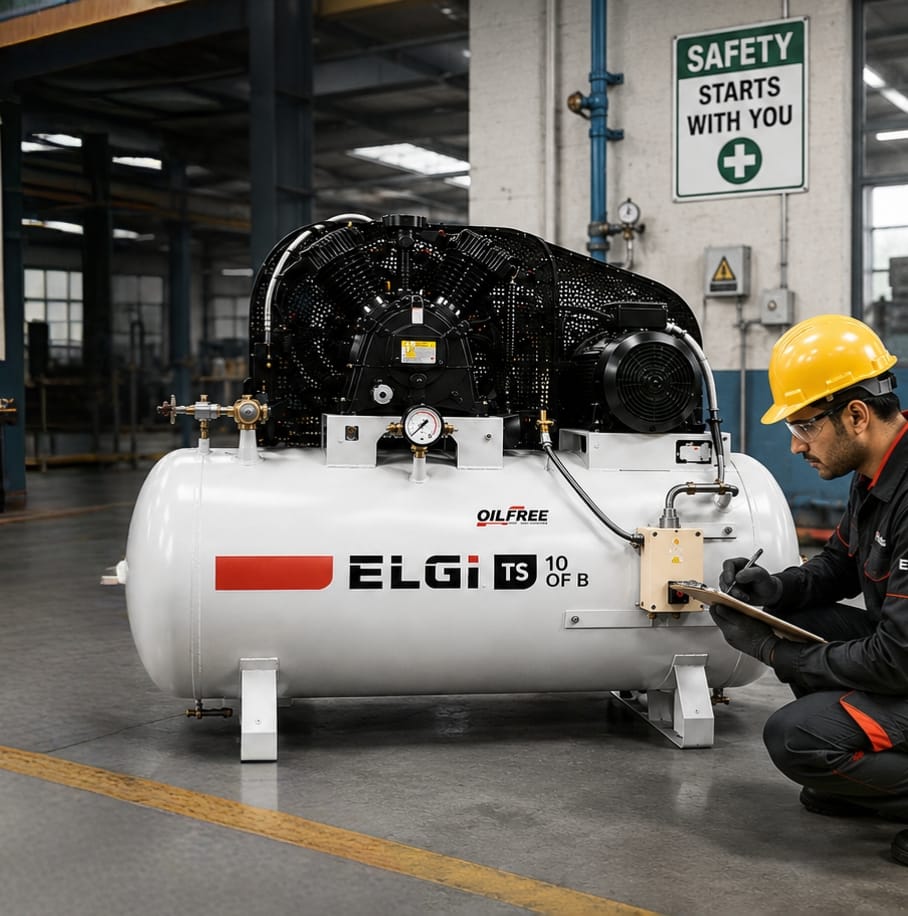
Piston air Compressor for Furniture Workshops
a piston air compressor, also called a reciprocating compressor, uses a piston moving inside a cylinder to compress air.
Piston compressors are often suitable for smaller workshops with intermittent compressed-air demand.
advantages:
- Generally lower initial purchase cost
- Practical for intermittent pneumatic-tool usage
- Compact models available
- Suitable for smaller workshop applications
- Established compressor technology
Limitations:
- Many models have duty-cycle restrictions
- Often produce more noise and vibration
- Smaller units may struggle with sustained high airflow demand
a piston compressor may be suitable for a small furniture workshop using nail guns, staplers, and other tools occasionally.
Rotary Screw air Compressor for Furniture Manufacturing
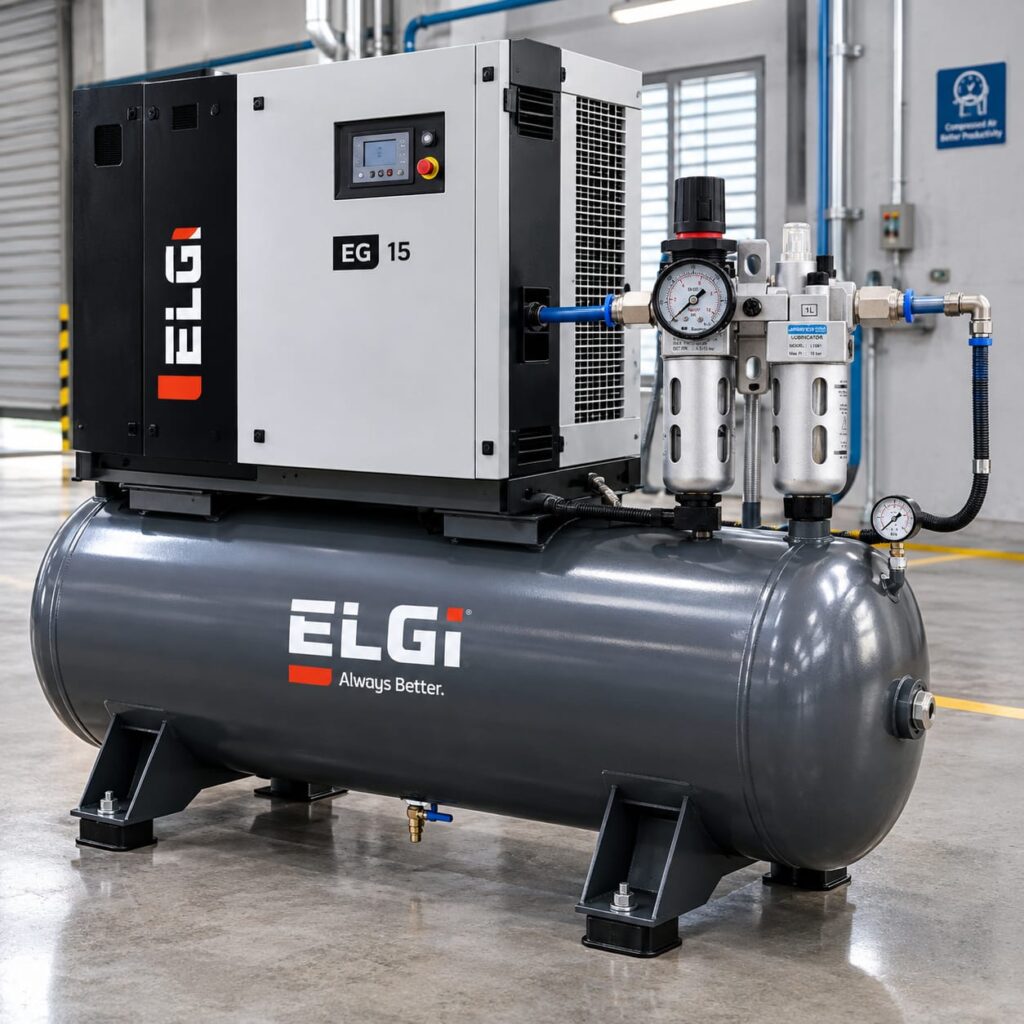
a rotary screw compressor uses rotating screw elements to compress air.
These compressors provide relatively steady airflow and are widely used in industrial manufacturing.
advantages:
- Suitable for sustained industrial operation
- Relatively continuous air delivery
- Can support multiple pneumatic machines when properly sized
- Many enclosed models have lower operating noise
- available in a wide range of industrial capacities
Limitations:
- Generally higher initial investment
- Requires scheduled servicing
- Oversized systems may waste energy
a rotary screw compressor is often worth considering for furniture manufacturers operating multiple pneumatic sanders, spray equipment, and automated machines for extended periods.
Piston vs Screw air Compressor Comparison
| Factor | Piston air Compressor | Rotary Screw air Compressor |
| Typical application | Small workshops | Medium-to-large factories |
| air Demand | Often intermittent | Often sustained |
| Initial Cost | Generally lower | Generally higher |
| air Delivery | Pulsating | Relatively steady |
| Multiple Tool Usage | Depends on capacity | Suitable when correctly sized |
| Noise | Often higher | Often lower in enclosed models |
| Maintenance | Periodic servicing | Scheduled industrial servicing |
| Operating Efficiency | Depends on usage | Depends on sizing and controls |
Selection tip: Choose the compressor based on actual airflow demand and operating hours rather than assuming one technology is always better.
Step 5: Consider Your Workshop's Daily Operating Hours
The number of hours your compressor operates each day is an important selection factor.
a furniture workshop operating for a few hours may have different requirements from a manufacturing facility running multiple production shifts.
Intermittent Operation
a piston compressor may be appropriate when:
- Pneumatic tools are used occasionally
- air consumption is relatively low
- Equipment operates in short cycles
- The compressor's rated duty cycle is sufficient
Sustained Operation
a rotary screw compressor may be appropriate when:
- Several pneumatic machines operate throughout the shift
- air demand is relatively continuous
- Production depends heavily on compressed air
- Extended operating hours are required
always review the specific compressor's duty rating and manufacturer's operating recommendations.
Step 6: Evaluate air Compressor Energy Efficiency
Electricity is a significant operating cost in compressed-air systems.
Selecting an energy-efficient compressor requires understanding the workshop's actual air-demand profile.
Factors That affect Energy Consumption
- Compressor size
- Operating pressure
- airflow demand
- Motor and compressor efficiency
- Load and unload operation
- air leaks
- Control technology
- Maintenance condition
avoid Oversizing the Compressor
Purchasing a much larger compressor than required can increase investment costs and reduce operating efficiency.
Check for air Leaks
Leaks in hoses, pipes, fittings, and connections can waste compressed air and increase compressor runtime.
Regular leak inspections can help reduce unnecessary energy consumption.
Maintain the Correct Operating Pressure
Operating at unnecessarily high pressure generally increases the energy required for compression.
Use the lowest pressure that reliably meets equipment and system requirements.
Consider Variable-Speed Technology
Certain rotary screw compressors use variable-speed drives to adjust output according to changing air demand.
This can reduce energy waste in suitable applications, but actual savings depend on the compressor and operating conditions.
Step 7: Consider air Quality for Furniture Spray Painting
air quality is especially important for furniture manufacturing processes involving spray finishing.
Compressed air may contain moisture, oil aerosols, particles, and other contaminants.
These can affect some finishing processes and pneumatic equipment.
Why Moisture Control Matters
Moisture in compressed air can create problems for sensitive equipment and certain coating applications.
Why Filtration Matters
appropriate filters help remove specified contaminants from compressed air.
When Is an air Dryer Required?
an air dryer may be necessary when the application requires lower moisture content than the compressor system can otherwise provide.
For spray-finishing operations, the required air quality should be confirmed with the spray-equipment and coating-system specifications.
Typical Compressed-air System
a furniture manufacturing compressed-air installation may include:
air Compressor → air Receiver → air Dryer → air Filters → Distribution Piping → Pneumatic Equipment
The exact equipment arrangement depends on the compressor, application, and required air quality.
Step 8: Select the Right air Receiver Tank
an air receiver stores compressed air and helps support stable system operation.
Benefits of an air Receiver
- Provides temporary compressed-air storage
- Helps manage short demand fluctuations
- Can reduce rapid compressor cycling in suitable systems
- Supports system pressure stability
Does a Larger Tank Mean a Better Compressor?
Not necessarily.
a larger air receiver cannot compensate indefinitely for insufficient compressor airflow.
Tank capacity should be selected according to compressor characteristics, demand fluctuations, control strategy, and system requirements.
The receiver must also meet applicable pressure-vessel safety requirements and maintenance recommendations.
Step 9: Plan Proper Compressed-air Piping
Even a high-quality compressor may perform poorly if the compressed-air distribution system is incorrectly designed.
Furniture workshops often have multiple workstations spread across the production floor.
Common Piping Problems
- Undersized pipes
- Excessive pipe length
- Too many restrictive fittings
- Poorly maintained filters
- air leaks
- Inadequate drainage
Why Proper Piping Matters
a well-designed distribution system helps deliver sufficient airflow and pressure to the equipment.
It can also reduce avoidable energy losses.
When planning a furniture manufacturing facility, consider the location of pneumatic machines and the possibility of future production expansion.
Step 10: Consider Noise and Installation Space
air compressor installation should account for both operational performance and workplace conditions.
Noise Levels
Piston compressors often generate more noticeable mechanical noise and vibration.
Many enclosed rotary screw compressor packages operate more quietly, although actual noise levels vary by model.
Ventilation
air compressors generate heat during operation.
Proper ventilation and clearance are important for cooling and maintenance access.
Installation Location
Consider:
- available floor space
- ambient temperature
- Ventilation
- Electrical supply
- Noise exposure
- Service accessibility
- air-distribution layout
always follow the compressor manufacturer's installation instructions.
Step 11: Evaluate Maintenance and after-Sales Support
an air compressor is a long-term industrial investment.
Regular maintenance helps support performance, reliability, and equipment life.
Common Maintenance Requirements
Depending on the compressor model, maintenance may include:
- air filter inspection and replacement
- Oil changes
- Oil-filter replacement
- air/oil separator maintenance
- Belt or drive inspection
- Cooling-system maintenance
- air leak checks
- Electrical and controller inspection
Why after-Sales Support Matters
Unexpected compressor downtime can interrupt production when pneumatic equipment depends on the compressed-air supply.
When choosing a supplier, consider the availability of:
- Technical assistance
- Scheduled maintenance
- Genuine spare parts
- Installation support
- Equipment servicing
Working with an authorised compressor dealer can help businesses obtain relevant product guidance and support.
Step 12: Calculate the Total Cost of Ownership
The purchase price is only one part of the overall cost of an air compressor.
Furniture manufacturers should also evaluate long-term expenses.
Initial Investment
Includes the compressor and required accessories.
Electricity Cost
Depends on compressor efficiency, operating hours, pressure, and demand.
Maintenance Cost
Includes scheduled servicing, replacement parts, and consumables.
air Treatment Cost
May include dryers, filters, drains, and related maintenance.
Installation Cost
Includes electrical connections, piping, ventilation, and other installation requirements.
Production Downtime
Insufficient capacity or equipment failures can affect manufacturing schedules.
The right compressor should provide dependable performance at a reasonable total ownership cost—not simply the lowest purchase price.
Step 13: Plan for Future Furniture Manufacturing Expansion
Furniture businesses may expand their production capacity over time.
a small workshop may eventually add:
- More pneumatic sanders
- additional spray-finishing stations
- CNC woodworking machines
- automated clamping systems
- New production lines
When selecting an air compressor, consider realistic future equipment requirements.
However, avoid purchasing excessive capacity for expansion plans that may never occur.
In some cases, a modular compressed-air system or future compressor addition may be more practical than installing one oversized machine immediately.
Common Mistakes to avoid When Buying an air Compressor for Furniture Manufacturing
Choosing Based Only on Horsepower
Horsepower alone does not indicate the usable airflow delivered at the required pressure.
Ignoring Simultaneous air Demand
Multiple tools operating together may require significantly more airflow.
Selecting the Wrong Compressor Technology
a small intermittent workshop and a continuous industrial production line may require different solutions.
Ignoring air Quality
Moisture and contaminants can affect finishing processes and sensitive pneumatic equipment.
Oversizing the Compressor
Excessive capacity can increase purchase and energy costs.
Ignoring air Leaks
Leaks waste compressed air and increase operating expenses.
Poor Installation Planning
Inadequate ventilation, electrical supply, or piping can affect performance.
Neglecting Maintenance
Poor maintenance can reduce reliability and increase downtime risk.
Ignoring Future Expansion
a compressed-air system should accommodate reasonable business growth.
Choosing a Supplier Without Technical Support
Product guidance, installation assistance, spare parts, and maintenance support are important considerations.
Which air Compressor Is Best for Different Furniture Manufacturing applications?
| Furniture Manufacturing application | Compressor Selection Consideration |
| Small Furniture Workshop | Piston compressor may suit intermittent demand |
| Upholstery Workshop | Piston compressor may be sufficient for intermittent stapling |
| Pneumatic Nail Gun Operation | Size according to tool airflow and usage frequency |
| Single Orbital Sander | Piston or screw, depending on duty and airflow |
| Multiple Orbital Sanders | Screw compressor often worth evaluating |
| Furniture Spray Painting | airflow, pressure, and air quality are critical |
| CNC Woodworking Machinery | Follow machine-specific air requirements |
| Large Furniture Manufacturing Facility | Screw compressor often suits sustained demand |
| automated Furniture Production Line | Industrial system sized for combined demand |
These are general selection guidelines. Final compressor sizing must be based on actual equipment specifications and operating conditions.
Why Choose ELGi air Compressors for Furniture Manufacturing?
ELGi offers reciprocating and rotary screw air compressor technologies for a range of industrial compressed-air applications.
Furniture manufacturers can evaluate suitable ELGi compressor solutions based on their production requirements.
Range of Compressor Technologies
Different compressor configurations can support intermittent workshop applications and sustained industrial operations.
Industrial applications
Compressed-air solutions can be selected for pneumatic tools, production equipment, and other manufacturing processes.
Energy and Operating Requirements
Specific compressor models can be evaluated according to delivered airflow, pressure, efficiency, and control technology.
Maintenance Planning
Following the manufacturer's recommended maintenance schedule helps support reliable operation.
Selecting the appropriate model is more important than choosing equipment solely by brand, horsepower, or purchase price.
Why Choose Rahul Enterprises for air Compressors in Rajasthan?
Rahul Enterprises is an authorised ELGi air compressor dealer based in Jodhpur, Rajasthan, serving industrial customers across the state.
Furniture manufacturers need compressed-air solutions that match their production requirements.
Rahul Enterprises supports businesses with compressor selection and related industrial services.
ELGi Piston and Screw air Compressors
assistance with evaluating suitable reciprocating and rotary screw compressor options.
Compressor Selection Guidance
Support in understanding airflow, operating pressure, and application requirements.
Installation Support
assistance with planning and installing compressed-air equipment.
Servicing and Maintenance
Maintenance support to help keep equipment operating reliably.
Genuine Spare Parts
access to appropriate genuine spare parts for relevant equipment.
Technical Support
Guidance for industrial compressed-air applications and equipment requirements.
Whether you operate a small woodworking workshop or a larger furniture manufacturing facility, Rahul Enterprises can help you evaluate suitable ELGi compressed-air solutions.
Final Checklist: How to Choose the Right air Compressor for Furniture Manufacturing
Before purchasing an air compressor, review the following points:
- Identify all pneumatic tools and machines.
- Check each tool's airflow requirement.
- Calculate realistic simultaneous air demand.
- Determine the required operating pressure.
- Evaluate daily operating hours and duty cycle.
- Compare piston and rotary screw compressor technologies.
- Review compressor energy performance.
- Identify air dryer and filtration requirements.
- Select appropriate air receiver capacity.
- Plan compressed-air piping and installation.
- Consider noise, ventilation, and service access.
- Evaluate maintenance and spare-parts availability.
- Compare total ownership costs.
- Consider realistic future expansion.
- Consult a qualified compressed-air supplier before final selection.
Conclusion: Choose the Right air Compressor for Reliable Furniture Production
Choosing the right air compressor for furniture manufacturing requires a clear understanding of your workshop's production needs.
a small furniture workshop with intermittent pneumatic-tool usage may benefit from a properly sized piston compressor.
a larger manufacturing facility operating several pneumatic sanders, spray-finishing stations, and automated machines may benefit from a rotary screw compressor designed for sustained operation.
However, compressor technology is only one part of the decision.
airflow, operating pressure, duty cycle, air quality, energy consumption, piping, maintenance, and future expansion all influence the final selection.
By evaluating these factors carefully, furniture manufacturers can choose a compressed-air system that supports reliable production and reasonable long-term operating costs.
Looking for an ELGi air Compressor for Your Furniture Workshop?
Rahul Enterprises – authorised ELGi air Compressor Dealer in Jodhpur, Rajasthan
Whether you need a piston air compressor for a small woodworking workshop or a rotary screw compressor for a larger furniture manufacturing facility, Rahul Enterprises can assist you in evaluating the right compressed-air solution.
Explore ELGi air compressors, installation support, maintenance services, and genuine spare parts for your industrial requirements.
Contact Rahul Enterprises today to discuss your furniture manufacturing compressed-air needs.
Frequently asked Questions (FaQs)
1. Which air compressor is best for furniture manufacturing?
The best compressor depends on the workshop's airflow demand, operating pressure, operating hours, and number of pneumatic tools. Piston compressors often suit intermittent demand, while rotary screw compressors are commonly suitable for sustained industrial operation.
2. What size air compressor do I need for a furniture workshop?
Calculate the airflow requirements of simultaneously operating tools, account for system losses and appropriate demand allowances, and compare compressor delivered-air ratings at the required pressure.
3. Is a piston compressor suitable for woodworking?
Yes. a properly sized piston compressor can operate pneumatic nail guns, staplers, and other woodworking tools with intermittent compressed-air requirements.
4. Is a rotary screw compressor better for large furniture factories?
Rotary screw compressors are often better suited to larger facilities with sustained compressed-air demand and multiple pneumatic workstations.
5. Which compressor is suitable for pneumatic orbital sanders?
The selection depends on the sander's airflow requirement and operating duration. Multiple continuously operating sanders may favor a rotary screw compressor.
6. Can one air compressor operate several woodworking machines?
Yes, provided the compressor and distribution system can deliver sufficient airflow and pressure for the combined operating demand.
7. What is CFM in an air compressor?
CFM stands for cubic feet per minute. It is a measure of airflow and helps determine whether a compressor can meet the requirements of connected pneumatic equipment.
8. What is the difference between CFM and PSI?
CFM measures airflow, while PSI measures pressure. Both are essential when selecting a compressor.
9. Do furniture spray-painting systems need an air dryer?
an air dryer may be required when moisture could affect coating quality or equipment performance. The required air quality depends on the specific finishing process.
10. Which air compressor is more energy efficient?
Energy efficiency depends on compressor technology, sizing, operating pressure, load profile, controls, and maintenance. Neither piston nor screw technology is universally more efficient.
11. Is a bigger air compressor always better?
No. an oversized compressor may increase investment and energy costs. The compressor should match actual production requirements.
12. Why does air pressure drop in furniture workshops?
Pressure drops can result from insufficient compressor capacity, excessive simultaneous demand, leaks, restrictive filters, undersized piping, or other distribution-system problems.
13. How often should an industrial air compressor be serviced?
Service intervals depend on the compressor model, operating hours, environment, and manufacturer's recommendations.
14. When should I upgrade my furniture workshop air compressor?
Consider an assessment when production expands, pressure becomes insufficient, additional pneumatic machines are installed, or the existing compressor regularly operates beyond its rated duty.
15. Where can I buy an ELGi air compressor in Rajasthan?
Rahul Enterprises in Jodhpur is an authorised ELGi air compressor dealer serving industrial customers across Rajasthan, including furniture manufacturing businesses.