GRaCO Industrial Painting Solutions: Complete Guide to Spray Equipment, Pumps, Benefits & Selection
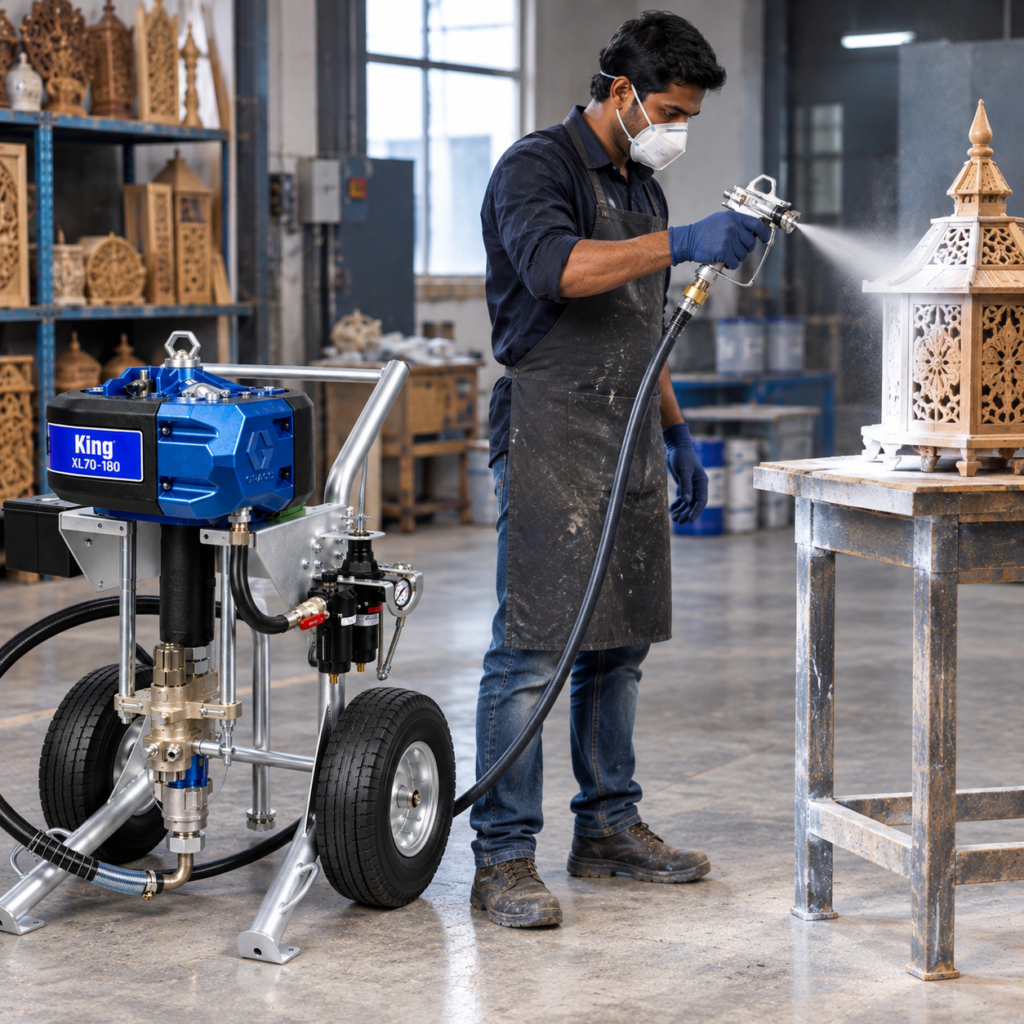
Industrial painting is much more than applying a layer of paint to a surface. In furniture manufacturing, automotive workshops, metal fabrication, engineering plants, construction-related operations, and industrial production, the quality of the painting system can directly influence finishing consistency, productivity, material handling, and the overall quality of the finished product.
When businesses rely on an unsuitable spray system, they may face problems such as inconsistent coating, excessive overspray, poor finish quality, unnecessary paint consumption, frequent interruptions, or difficulty maintaining production speed.
This is where professional GRaCO painting and fluid-handling solutions can play an important role.
GRaCO offers equipment for professional and industrial applications involving spraying, pumping, fluid handling, and coating processes. Depending on the application, a business may require an airless spray system, air-assisted airless system, diaphragm pump, piston pump, spray gun, or other fluid-handling equipment.
However, selecting professional painting equipment should never be based only on pump size, pressure, or purchase price.
The correct solution depends on factors such as:
Coating Material → Required Finish → Production Volume → Fluid Viscosity → Pressure → Flow Requirement → Spray Technology → application Environment
Rahul Enterprises provides industrial painting and fluid-handling solutions for businesses in Jodhpur and across Rajasthan, helping customers identify suitable GRaCO equipment according to their actual applications.
This complete guide explains GRaCO industrial painting solutions, different spray technologies, pumps, applications, benefits, selection factors, maintenance, and common mistakes businesses should avoid.
What are GRaCO Industrial Painting Solutions?
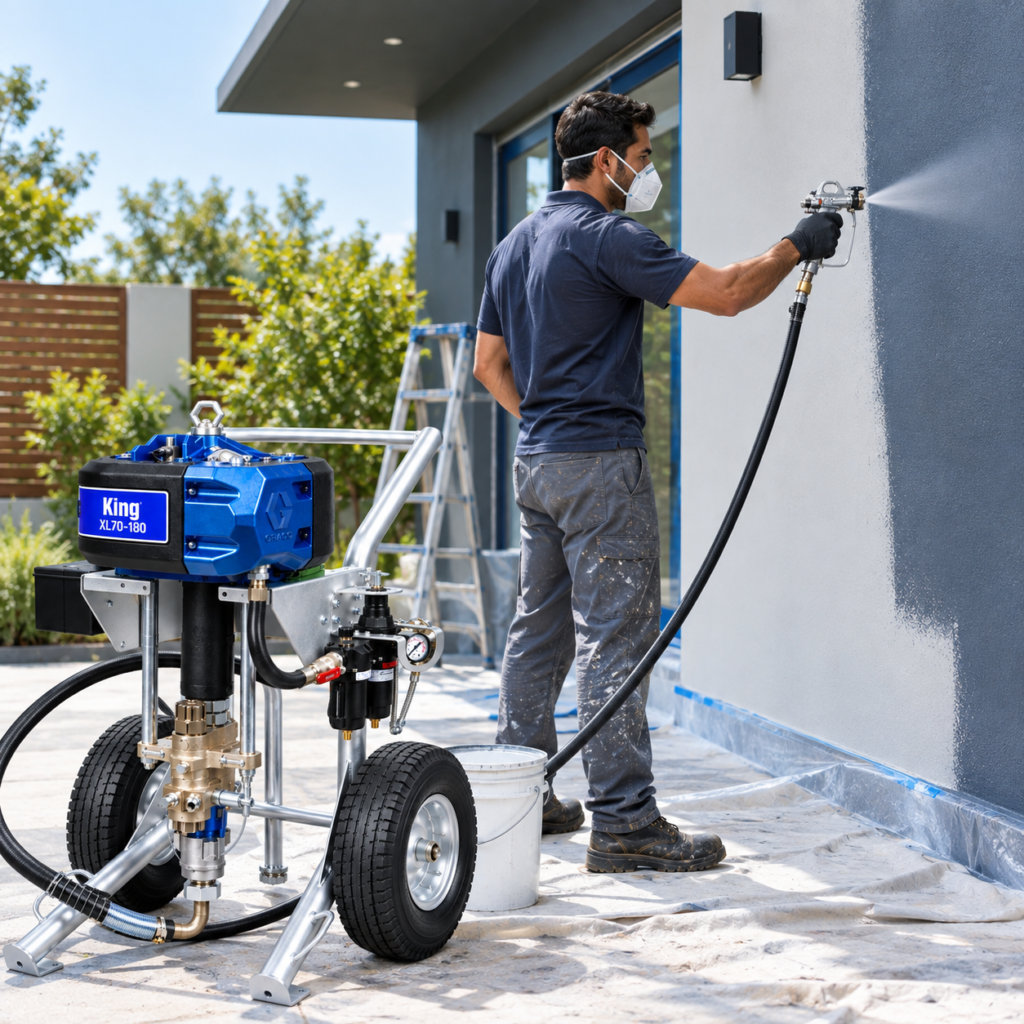
GRaCO industrial painting solutions include equipment designed to move, control, and apply coatings and other compatible fluids in professional environments.
Depending on the process, a painting system may include:
- Pump
- Spray gun
- Fluid hose
- air hose where required
- Pressure controls
- Filters
- Spray tip/nozzle
- Fluid container or supply system
- appropriate compressed-air equipment where required
The complete system must work together.
a high-quality pump connected to an unsuitable spray tip or incorrectly configured air supply will not automatically produce a high-quality finish.
Professional painting should therefore be approached as a complete system, rather than treating each component separately.
Why Professional Painting Equipment Matters
Industrial painting operations can involve repeated coating of hundreds or thousands of components.
Manual or unsuitable painting methods can make it difficult to maintain consistent production.
Professional equipment can help businesses create a more controlled application process.
Important objectives may include:
- Consistent coating application
- Improved production efficiency
- Better finishing control
- appropriate material delivery
- Reduced unnecessary interruptions
- Better operator workflow
- Repeatable production processes
The exact benefit depends on the coating, equipment, operator technique, setup, and application.
Understanding the Industrial Painting Process
a professional painting process normally involves more than the spray gun.
a simplified workflow can look like:
Surface Preparation → Material Preparation → Fluid Delivery → atomization → Spray application → Drying/Curing → Inspection
Every stage matters.
If the surface is poorly prepared, even an excellent spray system may not produce the desired finish.
Likewise, incorrect coating preparation or spray settings can affect the final result.
Main Types of GRaCO Painting and Fluid-Handling Equipment
Different applications require different technologies.
Some of the most important categories include:
airless Spray Equipment
airless spraying uses high fluid pressure to atomize coating through a specially designed spray tip without using compressed air directly for primary atomization.
It is widely used where businesses need efficient application of suitable coatings over larger areas or at higher production rates.
air-assisted airless Equipment
air-assisted airless technology combines fluid pressure with additional atomizing air.
The objective is to provide greater control over atomization and finishing characteristics for suitable applications.
Double Diaphragm Pumps
air-operated double diaphragm pumps can transfer a wide range of compatible fluids.
They are used in many industrial fluid-transfer and coating-related processes.
Piston Pumps
Piston pumps are another important fluid-delivery technology used where the application requires suitable pressure and flow characteristics.
Professional Spray Guns
The spray gun is the operator's final point of control during coating application.
Gun selection should match the spray technology, coating, pressure, and finishing requirement.
What Is an airless Paint Sprayer?
an airless paint sprayer uses a pump to pressurize coating material and force it through a small spray-tip opening.
The pressure and tip design cause the coating to atomize into a spray pattern.
a simplified system is:
Paint/Coating → Pump → Fluid Hose → Spray Gun → Spray Tip → Workpiece
Unlike conventional air spray, compressed air is not used as the primary atomization method at the spray gun.
How Does GRaCO airless Spray Equipment Work?
although exact operation varies between models, the basic process can be understood in stages.
Step 1 – Coating Enters the Pump
The compatible paint or coating is supplied to the pumping system.
Step 2 – Pump Pressurizes the Material
The pump generates the fluid pressure required for the application.
Step 3 – Material Travels Through the Fluid Hose
Pressurized coating moves toward the spray gun.
Step 4 – Coating Passes Through the Spray Tip
The tip helps determine the spray pattern and material flow characteristics.
Step 5 – Coating Reaches the Surface
The operator moves the gun across the workpiece using the appropriate spraying technique.
Benefits of airless Spray Technology
airless technology can provide several advantages for suitable applications.
Faster Coating application
airless equipment can be useful where relatively large surfaces or high production requirements need to be coated efficiently.
Suitable for Various Professional Coating applications
Depending on equipment and material compatibility, airless systems can handle coatings used across multiple professional applications.
Consistent Material Delivery
Correctly selected and configured equipment can support repeatable fluid delivery.
Useful for Large Surface areas
Industrial components, structures, walls, fabricated products, and other larger surfaces may benefit from efficient spray application.
What Is air-assisted airless Spray Technology?
an air-assisted airless spray system combines two technologies.
Fluid is pressurized for primary atomization, while additional compressed air assists in refining the spray.
In simplified form:
Fluid Pressure + atomizing air → Controlled Spray Pattern
This technology can be useful where finishing quality and production efficiency both matter.
airless vs air-assisted airless Spray
Choosing between these technologies depends on the application.
| Factor | airless Spray | air-assisted airless |
| Primary atomization | Fluid pressure | Fluid pressure + assisting air |
| Compressed air at Gun | Not primary requirement | Required |
| application Speed | Suitable for productive coating | Productive with additional atomization control |
| Finish Requirement | application-dependent | Often considered where finer control is important |
| System Complexity | Relatively straightforward | Requires fluid and air control |
| Typical Selection | Larger-area/high-output coating | Production finishing requiring added spray control |
Neither system is automatically better.
The correct choice depends on the coating and desired result.
What Is a GRaCO Double Diaphragm Pump?
a double diaphragm pump uses reciprocating flexible diaphragms to move compatible fluid through the pump.
air-operated double diaphragm pumps are widely used in industrial fluid-transfer applications.
Depending on the pump configuration and material compatibility, they may handle different fluids used in production and finishing processes.
How Does a Double Diaphragm Pump Work?
a simplified operating cycle is:
Compressed air → Diaphragm Movement → Suction → Fluid Transfer → Discharge
as one diaphragm creates suction on one side, the opposite side pushes fluid toward the discharge.
The cycle repeats continuously while the pump operates.
applications of Double Diaphragm Pumps
Depending on pump construction and fluid compatibility, diaphragm pumps can be considered for applications such as:
- Paint transfer
- Coating materials
- Fluid transfer
- Manufacturing processes
- Finishing operations
- Circulation applications
- General industrial fluid handling
The pump materials must always be compatible with the fluid being transferred.
GRaCO Piston Pumps for Painting applications
Piston pumps use reciprocating piston movement to displace fluid.
They can be used in professional coating systems where specific pressure and flow requirements need to be achieved.
a painting setup might include:
Coating Supply → Piston Pump → Fluid Regulation → Hose → Spray Gun → Workpiece
The exact arrangement depends on the GRaCO system and application.
Understanding Spray Guns
The spray gun has a major influence on how an operator applies coating.
Important considerations include:
- Gun compatibility
- Operating pressure
- Spray technology
- Trigger control
- Tip/nozzle selection
- Operator ergonomics
- Material compatibility
a professional pump cannot compensate for an incorrectly selected or poorly maintained spray gun.
Why Spray Tip Selection Matters
The spray tip is a small component with a major influence on the coating process.
Depending on the system, tip selection can affect:
- Spray width
- Material flow
- atomization
- application rate
- Finish quality
The correct tip should be selected according to the coating manufacturer's recommendations and equipment specifications.
Bigger Spray Tips are Not always Better
a larger tip may allow more material flow, but that does not mean it is correct for every application.
Too much material can contribute to:
- Excessive coating build
- Runs or sags
- Poor finish
- Increased material use
- Reduced application control
Similarly, an undersized or inappropriate tip may not deliver the coating correctly.
Correct sizing matters more than simply choosing the largest available option.
GRaCO Painting Solutions for Furniture Manufacturing
Furniture manufacturing requires careful surface preparation and coating application.
a typical furniture finishing workflow may include:
Wood Preparation → Orbital Sanding → Dust Removal → Coating Preparation → Spray application → Drying/Curing → Inspection
Professional spray equipment can support production of:
- Wooden furniture
- Cabinets
- Doors
- Panels
- Tables
- Chairs
- Interior components
- Decorative products
The correct spray technology depends on the coating material and required finish.
Connecting Orbital Sanding with Professional Painting
High-quality painting begins with high-quality surface preparation.
This is why orbital sanding and GRaCO painting equipment can form two important stages of the same production process.
For example:
Stage 1 – Surface Sanding
an orbital sander helps prepare and smooth the workpiece.
Stage 2 – Dust Removal
Residual sanding dust is removed appropriately.
Stage 3 – Coating Preparation
Paint or coating is prepared according to its technical requirements.
Stage 4 – Spray application
GRaCO equipment delivers the coating.
application Control
Correct pressure, spray tip, gun movement, and material settings influence the coating.
Final Inspection
The finished component is checked for defects and consistency.
Complete Finishing Principle
Surface Preparation + Correct Coating + Suitable Spray Equipment + Proper Operator Technique = Better Finishing Process
GRaCO Solutions for automotive Workshops
automotive repair and refinishing require controlled surface preparation and coating application.
Professional spray systems may be used in appropriate automotive or component-finishing processes depending on the coating and required finish.
Important factors include:
- Coating material
- Required atomization
- Spray pattern
- Production volume
- air quality
- Fluid pressure
- application environment
Equipment should always be matched to the specific refinishing process.
GRaCO Solutions for Metal Fabrication
Metal fabricators often need to coat manufactured products for appearance, protection, or application-specific purposes.
Examples can include:
- Fabricated structures
- Frames
- Machinery components
- Industrial equipment
- Metal furniture
- Panels
- Manufactured assemblies
Professional spray equipment can help businesses establish a more controlled coating workflow.
GRaCO Solutions for Manufacturing Plants
Production environments often require repeatable processes.
When hundreds of components need to be coated, businesses must consider:
Production Rate + Coating Consumption + Finish Quality + Equipment Reliability + Operator Efficiency
The right fluid-handling and spray system can support a more organized production process.
How to Choose the Right GRaCO Painting Equipment
Professional spray equipment should be selected according to the application.
Consider these factors carefully.
1. Identify the Coating Material
Start with what you need to spray or transfer.
Different materials can have different:
- Viscosity
- Solids content
- Chemical characteristics
- Pressure requirements
- atomization requirements
always check compatibility.
2. Determine Required Finish Quality
a large industrial structure and premium furniture may have very different finish expectations.
Your finish requirement influences the choice of spray technology.
3. Evaluate Production Volume
ask:
- How many components are painted per day?
- How many hours will equipment operate?
- Is painting occasional or continuous?
- Is the process manual or production-oriented?
a small workshop and a large production plant should not automatically use the same system.
4. Determine Flow Requirements
The pump must provide sufficient fluid flow for the application.
Too little flow can restrict production.
Unnecessary oversizing can increase investment without providing practical benefit.
5. Determine Pressure Requirements
Pressure should match the coating and spray technology.
More pressure is not automatically better.
Excessive pressure may increase equipment stress, material velocity, and unwanted spray effects without improving the process.
The objective is to operate within the appropriate range for effective atomization and application.
6. Check Material Compatibility
Pump wetted components, hoses, seals, guns, and other fluid-contact parts must be compatible with the material being handled.
This is particularly important when working with chemicals, solvents, coatings, or specialized fluids.
7. Consider Compressed air Requirements
Some GRaCO equipment uses compressed air.
If pneumatic equipment is selected, the factory's air compressor must provide sufficient airflow and pressure.
The air system may also require appropriate:
- Filtration
- Regulation
- Moisture management
- Piping
- air treatment
This connects painting performance with the quality of the compressed-air system.
Why Clean Compressed air Matters for Painting
Compressed air quality can be important in painting applications that use air-powered equipment or atomizing air.
Moisture, oil, or contamination reaching sensitive painting processes may contribute to finishing problems.
a properly designed system may include:
air Compressor → Receiver → Moisture Separation → Dryer → Filtration → Piping → Point-of-Use Regulation → Painting Equipment
The exact air-quality requirement depends on the process and equipment.
Role of FRL Units in GRaCO Pneumatic Equipment
an FRL or Filter-Regulator arrangement may be used with appropriate pneumatic equipment depending on manufacturer requirements.
The filter helps manage specified contamination.
The regulator controls downstream pressure.
a lubricator should only be used where the downstream equipment specifically requires or permits lubricated air.
For painting applications, do not automatically introduce oil into air used for atomization or other processes requiring clean air.
always follow the GRaCO equipment requirements.
How to Improve Paint Finish Quality
Professional equipment helps, but finishing quality depends on the complete process.
Businesses should control:
- Surface preparation
- Surface cleanliness
- Coating preparation
- Material viscosity where applicable
- Spray pressure
- atomizing air where applicable
- Spray tip/nozzle
- Gun distance
- Gun angle
- Operator movement
- Booth/environment conditions
- Drying or curing process
One incorrect stage can affect the final appearance.
Common Spray Painting Problems
Understanding common problems can help improve process control.
Uneven Spray Pattern
Possible causes can include:
- Worn or blocked tip
- Incorrect pressure
- Material issue
- Gun maintenance problem
Excessive Overspray
Possible contributors can include:
- Excessive pressure
- Incorrect spray setup
- Poor operator technique
- Unsuitable tip
- Incorrect gun distance
Runs and Sags
Possible causes include:
- Excessive material application
- Slow gun movement
- Incorrect tip
- Incorrect material condition
- Gun held too close
Poor atomization
Potential causes can include:
- Insufficient or inappropriate pressure
- Incorrect tip/nozzle
- Material viscosity
- Equipment selection
- Restricted flow
Inconsistent Finish
Look at the complete process rather than blaming the pump immediately.
Surface preparation, coating condition, pressure, operator technique, environmental conditions, and equipment maintenance can all affect the result.
How to Reduce Paint Waste
Paint and coating materials can represent a significant operating cost.
Businesses can improve material control by focusing on:
- Correct spray pressure
- Suitable spray technology
- Correct tip selection
- Proper gun technique
- Consistent gun distance
- Preventive maintenance
- Operator training
- Correct material preparation
The objective should be to apply the required coating efficiently rather than simply increasing pressure or material flow.
GRaCO Equipment Maintenance Guide
Professional painting equipment requires routine care.
always follow the instructions for the exact GRaCO product and coating material.
General maintenance principles include:
Clean Equipment Correctly
Coating should not be allowed to cure inside components that require cleaning after use.
Inspect Filters
Restricted filters can affect fluid flow.
Inspect Spray Tips
Spray tips wear with use.
a worn tip can alter the spray pattern and material delivery.
Inspect Hoses
Check hoses for damage, wear, leakage, or other unsafe conditions.
Inspect Pump Components
Seals, packing, diaphragms, valves, and other wear components should be serviced according to equipment requirements.
Maintain air Supply
For air-operated equipment, check compressed-air quality, pressure, hoses, and connections.
Safety When Using High-Pressure Spray Equipment
Professional spray systems can operate at significant pressures.
High-pressure fluid can cause serious injury.
Operators should be trained and should follow all equipment safety instructions.
Important precautions include:
- Never point a spray gun toward yourself or another person.
- Do not place hands in front of a spray tip.
- Follow the correct pressure-relief procedure before servicing.
- Use appropriate personal protective equipment.
- Inspect hoses and fittings.
- Follow coating-material safety information.
- Ensure appropriate ventilation.
- Follow grounding and electrical/static-control requirements where applicable.
- Never exceed equipment pressure ratings.
Safety instructions supplied with the exact GRaCO equipment and coating material take priority over general guidance.
Common Mistakes When Buying Industrial Painting Equipment
Mistake 1 – Choosing Only by Price
a low-cost system that cannot handle the required coating or production volume may cost more through poor productivity and downtime.
Mistake 2 – Selecting Only by Maximum Pressure
Higher pressure does not automatically mean a better painting system.
Mistake 3 – Ignoring Coating Viscosity
The coating must be compatible with the pump and spray system.
Mistake 4 – Ignoring Finish Requirements
Equipment for high-output protective coating may not be the ideal choice for a process requiring very fine finishing.
Mistake 5 – Choosing the Wrong Spray Tip
Tip selection significantly affects application.
Mistake 6 – Ignoring Compressed-air Capacity
air-powered systems require adequate air supply.
Mistake 7 – Neglecting Maintenance
Professional equipment still requires cleaning, inspection, and preventive service.
GRaCO Painting Equipment Buying Checklist
Before selecting equipment, determine:
| Selection Factor | What to Check |
| application | Furniture, automotive, fabrication, industrial |
| Material | Paint, coating or compatible fluid |
| Viscosity | Material characteristics |
| Finish | Required surface quality |
| Production | Daily/shift workload |
| Spray Technology | airless, air-assisted airless or other |
| Pump Type | appropriate for application |
| Flow | Required material delivery |
| Pressure | Required operating range |
| Spray Tip | Compatible with material and finish |
| air Supply | For pneumatic equipment |
| Material Compatibility | Wetted components and seals |
| Hose | Pressure and material compatibility |
| Maintenance | Cleaning and service requirements |
| Safety | Process and material hazards |
| Support | Correct equipment-selection guidance |
Total Cost of Ownership of Painting Equipment
Businesses should not judge professional equipment only by purchase price.
a more complete approach considers:
Purchase Cost + Material Consumption + Maintenance + Consumables + Energy/air Cost + Labour + Downtime
a system with a higher initial investment may make commercial sense if it better suits the production requirement.
Likewise, an expensive system that is unnecessarily oversized may provide little additional value.
The objective is the right equipment for the application.
GRaCO Professional Painting Solutions from Rahul Enterprises
Rahul Enterprises supports industrial customers with professional painting, coating, fluid-handling, and production solutions in Jodhpur and across Rajasthan.
Solutions can include equipment categories such as:
✔ GRaCO airless Painting Solutions – Professional spray equipment for suitable industrial and commercial coating applications.
✔ GRaCO air-assisted airless Solutions – For applications requiring productive coating with additional atomization control.
✔ GRaCO Double Diaphragm Pumps – Fluid-transfer solutions for compatible industrial materials and processes.
✔ GRaCO Piston Pump Solutions – Professional fluid-delivery equipment for appropriate coating applications.
✔ Spray & Fluid Handling Equipment – Supporting industrial painting and production requirements.
GRaCO Painting Solutions for Furniture Industries
Furniture manufacturers can benefit from viewing sanding and painting as one integrated finishing process.
Rahul Enterprises can support different stages through industrial solutions involving:
Orbital Sanding → Compressed air → air Preparation → Professional Painting → Controlled Finishing
This approach helps businesses evaluate the production process as a whole rather than purchasing disconnected equipment.
Why Choose Rahul Enterprises for GRaCO Solutions?
Choosing professional painting equipment requires understanding both the equipment and the application.
Rahul Enterprises helps industrial customers evaluate factors such as:
- Coating material
- Required finish
- Production volume
- Fluid pressure
- Fluid flow
- Pump type
- Spray technology
- Compressed-air requirements
- application environment
- Maintenance needs
This helps customers identify equipment based on actual production requirements rather than simply selecting the highest-pressure or largest available system.
GRaCO Painting Equipment in Jodhpur and Rajasthan
Businesses searching for GRaCO painting equipment in Jodhpur, GRaCO airless spray equipment, GRaCO diaphragm pumps, GRaCO piston pumps, or professional industrial painting solutions can contact Rahul Enterprises to discuss their application.
Solutions can be considered for:
- Furniture manufacturers
- automotive workshops
- Fabrication units
- Engineering companies
- Manufacturing plants
- Paint shops
- Industrial finishing operations
- Production facilities
Correct equipment selection begins with understanding the coating and process.
Final GRaCO Equipment Selection Checklist
Before purchasing, ask:
- What material will be sprayed or transferred?
- What is the material viscosity?
- What finish quality is required?
- What is the daily production volume?
- Which spray technology is appropriate?
- What fluid pressure is required?
- What fluid flow is required?
- Which pump type suits the process?
- What spray tip is appropriate?
- Is compressed air required?
- Can the existing compressor supply enough air?
- What air quality is required?
- are pump materials compatible with the fluid?
- What hose specifications are required?
- How frequently will the equipment operate?
- How will the system be cleaned?
- Which components require preventive maintenance?
- are consumables and wear parts available?
- What operator training is required?
- What is the total operating cost?
answering these questions can make GRaCO equipment selection much more application-focused.
Conclusion
Professional industrial painting is a complete process involving surface preparation, material handling, fluid delivery, atomization, operator technique, environmental control, and maintenance.
GRaCO offers multiple technologies for professional coating and fluid-handling applications, including airless spray equipment, air-assisted airless systems, diaphragm pumps, piston pumps, and related spray equipment.
The right solution depends on:
Material → Viscosity → Finish → Production Volume → Flow → Pressure → Spray Technology → application
Businesses should avoid choosing painting equipment solely according to maximum pressure, pump size, or purchase price.
Instead, equipment should be selected around the actual coating process.
For businesses searching for GRaCO professional painting and fluid-handling solutions in Jodhpur and Rajasthan, Rahul Enterprises can help evaluate the application and identify appropriate equipment for furniture, automotive, fabrication, engineering, manufacturing, and industrial finishing operations.
Frequently asked Questions about GRaCO Painting Equipment
1. What is GRaCO painting equipment used for?
GRaCO equipment is used across professional applications involving spraying, coating, fluid transfer, and fluid handling. The appropriate equipment depends on the material and process.
2. What is an airless paint sprayer?
an airless sprayer pressurizes coating material and forces it through a spray tip, where it atomizes into a spray pattern without compressed air being the primary atomization method at the gun.
3. What is air-assisted airless spraying?
air-assisted airless spraying combines pressurized fluid with additional atomizing air to provide added control over the spray characteristics for suitable applications.
4. What is a double diaphragm pump?
a double diaphragm pump uses reciprocating diaphragms to transfer compatible fluids. air-operated versions use compressed air to drive the pumping action.
5. What is a piston pump used for?
Piston pumps can be used for fluid delivery in coating and other industrial applications where their pressure and flow characteristics suit the process.
6. Is GRaCO equipment suitable for furniture painting?
GRaCO offers professional coating technologies that can be considered for furniture-finishing applications. The exact equipment should be selected according to coating type, production volume, and required finish.
7. Can GRaCO equipment be used in automotive applications?
Suitable professional spray and fluid-handling equipment can be used in automotive and component-finishing processes depending on the specific application and coating requirements.
8. What is the difference between airless and air-assisted airless?
airless relies primarily on fluid pressure for atomization. air-assisted airless adds compressed atomizing air to the process.
9. Does GRaCO painting equipment require an air compressor?
It depends on the equipment. air-operated pumps and air-assisted systems require compressed air, while the requirements of individual airless systems vary by model and drive technology.
10. Why is spray tip selection important?
The spray tip influences spray width, flow, atomization, and application characteristics. It should match the coating and equipment.
11. Can higher spray pressure improve finish quality?
Not automatically. Pressure should be optimized for the coating and equipment. Unnecessarily high pressure can increase wear and unwanted spray effects.
12. How can paint waste be reduced?
Correct pressure, spray-tip selection, equipment setup, operator technique, maintenance, and material preparation can all contribute to better material control.
13. How often should GRaCO painting equipment be maintained?
Maintenance frequency depends on the exact equipment, material, operating hours, and application. Follow the manufacturer's cleaning, inspection, and service schedule.
14. How do I choose the right GRaCO pump?
Consider the fluid, material compatibility, viscosity, required pressure, required flow, production volume, operating environment, and intended application.
15. Where can I get GRaCO painting solutions in Jodhpur?
Businesses looking for GRaCO professional painting, spray, and fluid-handling solutions in Jodhpur and Rajasthan can contact Rahul Enterprises to discuss their coating and production requirements.