FRL Unit in Compressed air Systems: Functions, Benefits & Selection Guide
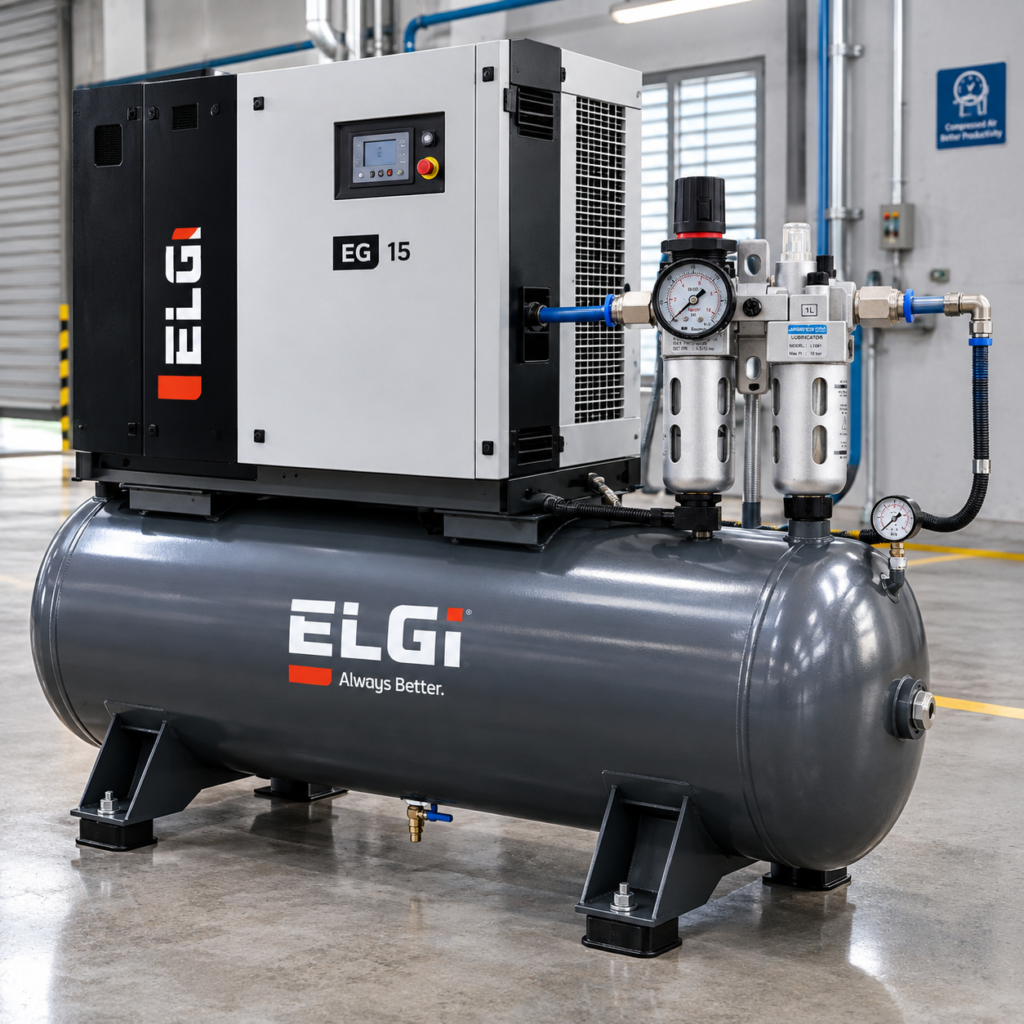
Compressed air is widely used across factories, workshops, manufacturing plants, automotive facilities, packaging units, fabrication shops, and other industrial environments. It powers pneumatic cylinders, air tools, valves, actuators, spray equipment, and many other components that support day-to-day production.
But generating compressed air is only one part of a reliable pneumatic system.
Before compressed air reaches sensitive pneumatic equipment, its condition and pressure need to be appropriate for the application. air may carry particles or moisture from upstream conditions, pressure can vary, and some pneumatic components may require controlled lubrication.
This is where an FRL Unit — Filter, Regulator, Lubricator — becomes important.
an FRL unit is installed in a compressed-air line to help filter contaminants, regulate downstream air pressure, and, where required, provide controlled lubrication for compatible pneumatic equipment.
However, simply installing any FRL unit is not enough. The unit must be selected according to airflow, pressure, connection size, filtration requirements, equipment needs, and the actual application.
This complete guide explains what an FRL unit is, how Filter-Regulator-Lubricator components work, their benefits, applications, selection considerations, installation practices, common problems, and maintenance requirements.
For businesses in Jodhpur and across Rajasthan, Rahul Enterprises provides compressed-air and pneumatic solutions, including FRL units and related equipment for industrial applications.
What Is an FRL Unit?
an FRL Unit is an air-preparation assembly commonly used in pneumatic and compressed-air systems.
FRL stands for:
F – Filter
R – Regulator
L – Lubricator
Each component performs a different function.
The filter helps remove specified contaminants from the compressed air.
The regulator helps control downstream pressure at the required setting.
The lubricator, when required by the downstream equipment, introduces a controlled amount of lubricant into the airflow.
Together, these components can help condition compressed air before it reaches pneumatic equipment.
a typical arrangement can be represented as:
air Compressor → air Receiver → air Treatment → Distribution Piping → FRL Unit → Pneumatic Equipment
The exact compressed-air system configuration depends on the application.
What Does FRL Stand For?
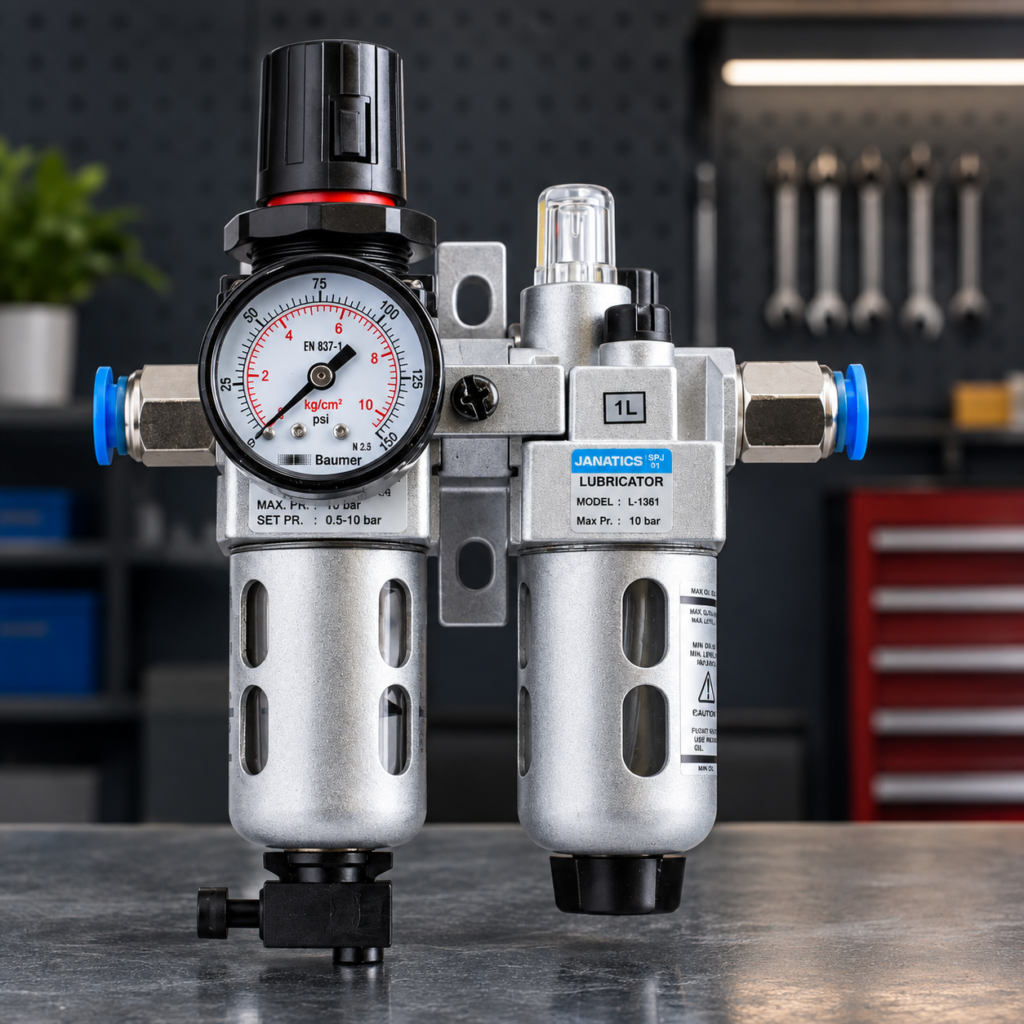
Understanding the three letters makes the purpose of the unit much easier to understand.
F – Filter
The filter is used to help remove contaminants from the compressed-air stream according to its filtration design and rating.
Depending on the system and filter type, contaminants may include particles and collected liquid condensate.
R – Regulator
The regulator controls downstream compressed-air pressure.
Different pneumatic devices may require different operating pressures, so the full compressor or main-line pressure should not automatically be supplied directly to every application.
L – Lubricator
a lubricator introduces a controlled quantity of oil into the airflow for downstream pneumatic components that are designed to use lubricated compressed air.
Importantly, not every modern pneumatic application requires or should receive added oil.
Lubrication should only be used when it is appropriate for the downstream equipment and consistent with the equipment manufacturer's requirements.
Why Is an FRL Unit Important in a Pneumatic System?
Pneumatic equipment performs best when supplied with compressed air that meets its operating requirements.
Problems can arise when the air supply contains excessive contamination, pressure is poorly controlled, or equipment requiring lubrication does not receive the appropriate lubrication.
an FRL assembly helps address these conditions close to the point of use.
Its main purposes can be summarized as:
air Preparation + Pressure Control + application-Specific Lubrication
This can support reliable pneumatic operation when the FRL is correctly selected, installed, operated, and maintained.
Understanding Compressed air Before It Reaches the FRL
To understand the role of an FRL unit, it helps to understand the compressed-air journey.
ambient air enters the compressor and is compressed. The compressed air then travels through the system and may pass through equipment such as an air receiver, moisture-management devices, dryers, filters, and distribution piping before reaching individual machines.
Even when a central compressed-air treatment system is installed, point-of-use air preparation can still be useful for specific equipment.
For example, one pneumatic machine may require a different downstream pressure from another.
a point-of-use regulator can help provide this control.
Likewise, a local filter may provide the filtration required at the equipment inlet, depending on the overall air-quality design.
Main Components of an FRL Unit
an FRL unit is best understood by examining each component individually.
1. Compressed air Filter
The filter is normally the first FRL component encountered by incoming compressed air.
Its job is to help remove specified contaminants before the air continues to the regulator and downstream equipment.
Why Is Filtration Important?
Contaminated compressed air can affect pneumatic components.
Particles and unwanted condensate may contribute to:
- Component wear
- Restricted passages
- Valve problems
- Reduced reliability
- Increased maintenance requirements
- Poor pneumatic performance
The required filtration level depends on the application.
How Does an FRL Filter Work?
The precise operating mechanism varies according to filter design.
Generally, compressed air enters the filter and contaminants are separated or captured by the filter system. Collected liquid and contamination can accumulate in the filter bowl and must be managed according to the unit's design.
Filter Element
The filter element provides the specified filtration performance and should be inspected and replaced according to its condition and manufacturer recommendations.
Important Maintenance Point
a heavily contaminated or restricted filter element can create unwanted pressure loss. Therefore, FRL filtration should not only be installed—it should also be maintained.
2. air Pressure Regulator
after filtration, compressed air typically passes through the regulator.
The air pressure regulator helps reduce and maintain downstream pressure at the setting required by the application, within the regulator's operating capability.
Suppose the main compressed-air line operates at a higher pressure than a particular pneumatic machine requires.
Supplying unnecessarily high pressure to the application may be undesirable.
a regulator allows the downstream pressure to be adjusted appropriately.
Why Is Pressure Regulation Important?
Correct pressure helps pneumatic equipment operate according to its intended conditions.
Poor pressure control can contribute to:
- Inconsistent machine performance
- Excessive compressed-air consumption
- Unnecessary stress on components
- Poor process consistency
- Difficulty controlling pneumatic operations
Does Higher air Pressure Mean Better Performance?
Not necessarily.
This is an important misunderstanding in compressed-air systems.
a pneumatic device should generally receive the pressure appropriate for its operating requirements.
Increasing pressure unnecessarily can increase compressed-air use without providing a useful benefit.
Pressure Should Be application-Based
Different equipment may require different pressure settings.
Practical Rule
Set the regulator according to the downstream equipment requirement—not simply according to the maximum pressure available from the compressor.
3. air Line Lubricator
The lubricator is typically positioned downstream of the filter and regulator when lubrication is required.
Its purpose is to introduce lubricant into the compressed-air stream in a controlled manner for compatible downstream equipment.
Why Is Lubrication Used?
Some pneumatic equipment is designed to operate with lubricated compressed air.
Where required, appropriate lubrication can support the intended operation of moving pneumatic components.
However, the important phrase is where required.
Does Every Pneumatic System Need a Lubricator?
No.
Many modern pneumatic components are designed for oil-free operation or are pre-lubricated according to their design.
Some applications may also specifically require oil-free air.
Therefore, a lubricator should not automatically be added to every compressed-air line.
always check the requirements of the downstream equipment.
applications Where added Oil May Be Unsuitable
Depending on the process, oil introduction may be undesirable in applications requiring strict air cleanliness or where downstream equipment is designed for non-lubricated operation.
Selection Rule
Use the lubricator only when the downstream pneumatic equipment requires or permits lubricated compressed air.
This is why some systems use an FR unit (Filter + Regulator) rather than a complete FRL assembly.
How Does an FRL Unit Work?
a typical FRL process can be understood in three stages:
Stage 1 – Filtration
Compressed air enters the filter, where specified contaminants are separated or captured.
Stage 2 – Pressure Regulation
Filtered air then passes through the regulator, which controls downstream pressure.
Stage 3 – Lubrication, If Required
The air passes through the lubricator, where a controlled amount of lubricant is introduced if the application requires it.
The conditioned air then travels to the pneumatic equipment.
In simplified form:
Compressed air → Filter → Regulator → Lubricator → Pneumatic Equipment
FRL Unit vs FR Unit: What's the Difference?
This distinction is important when selecting pneumatic air-preparation equipment.
| Configuration | Components | Typical Purpose |
| F | Filter | Filtration only |
| FR | Filter + Regulator | Filtration and pressure control |
| FRL | Filter + Regulator + Lubricator | Filtration, pressure control and lubrication |
| R | Regulator | Pressure regulation only |
an FRL unit is not automatically superior to an FR unit.
The correct choice depends on what the downstream equipment requires.
If a pneumatic system does not require added oil, an FR configuration may be more appropriate.
FRL Unit vs Compressed air Dryer
another common misunderstanding is that an FRL filter and an air dryer perform the same job.
They do not.
an air dryer is designed to reduce moisture content in compressed air to achieve the required dew-point conditions.
an FRL filter, depending on its design, can help remove specified particles and collected liquid contamination at or near the point of use.
Therefore:
air Dryer ≠ FRL Filter
a compressed-air system may use both as part of its overall air-treatment strategy.
FRL Unit vs Main-Line Compressed air Filter
a central compressed-air system may already contain filtration equipment.
So why install another filter near the pneumatic machine?
Because compressed-air treatment can be designed at different stages.
Central air Treatment
Central equipment helps condition air for the broader compressed-air network.
Point-of-Use air Preparation
an FRL or FR assembly can provide equipment-specific filtration and pressure control close to the application.
The required arrangement depends on the compressed-air quality requirements and system design.
Major Benefits of Using an FRL Unit
When correctly selected and applied, an FRL unit can provide several practical advantages.
1. Helps Protect Pneumatic Equipment
Filtration helps reduce the amount of specified contamination reaching downstream components.
This can support more reliable pneumatic operation.
2. Provides Controlled air Pressure
The regulator allows equipment to operate at an appropriate downstream pressure.
This can improve process consistency and prevent unnecessarily high pressure at the point of use.
3. Supports Consistent Pneumatic Performance
Stable downstream pressure can help pneumatic cylinders, valves, tools, and other equipment operate more consistently.
4. Can Reduce Unnecessary Compressed-air Consumption
Supplying more pressure than an application requires can waste compressed air.
Correct pressure regulation can help avoid unnecessary consumption caused by excessive point-of-use pressure.
5. Supports Equipment Life
Cleaner air and appropriate pressure can help reduce operating conditions that contribute to premature wear.
The actual service life depends on equipment design, operating environment, maintenance, duty cycle, and other factors.
6. Provides Lubrication Where Required
For equipment specifically designed to use lubricated compressed air, the lubricator can provide controlled oil delivery.
7. Supports Point-of-Use air Preparation
Different machines can have different requirements.
Installing an appropriate FR or FRL unit close to equipment provides localized control rather than assuming every machine should receive identical air conditions.
Where are FRL Units Used?
FRL units are used in a wide range of pneumatic and industrial applications.
Typical applications can include:
- Manufacturing machinery
- Pneumatic cylinders
- Pneumatic valves
- air-operated tools
- assembly equipment
- Packaging machinery
- automotive workshops
- Fabrication units
- Material-handling equipment
- Production lines
- Woodworking facilities
- Engineering workshops
- Industrial automation systems
The appropriate configuration depends on the equipment manufacturer's air-supply requirements.
FRL Units in Manufacturing Plants
Manufacturing facilities often contain multiple pneumatic devices operating from a common compressed-air network.
For example, a production machine may contain:
Pneumatic Cylinder + Directional Valve + actuator + air Line + Controls
The plant's main compressed-air system may supply several machines simultaneously.
Point-of-use FR or FRL units can allow individual machines or pneumatic circuits to receive appropriate filtration and regulated pressure.
This can make air preparation more application-specific.
FRL Units for Pneumatic Tools
Pneumatic tools rely on compressed air to operate.
The quality and pressure of the supplied air can influence tool performance.
a correctly selected air-preparation system can help provide:
- appropriate filtration
- Required pressure
- Lubrication where specified
However, tool manufacturers' recommendations should always determine whether lubrication is required.
FRL Units for Industrial automation
automation systems can contain pneumatic cylinders, valves, actuators, grippers, and other air-operated components.
Consistency is particularly important in automated production because variations can affect repeated machine movements and process performance.
a correctly selected regulator can help provide stable downstream pressure within its operating range.
Filtration can also help protect sensitive pneumatic components from specified contamination.
How to Select the Right FRL Unit
Selecting the correct FRL unit requires more than matching the pipe connection.
Several operating parameters should be evaluated.
1. Determine Required airflow
airflow is one of the most important selection factors.
The FRL unit must be capable of supplying the airflow required by downstream equipment without creating excessive pressure drop.
Consider:
- Normal air consumption
- Peak air demand
- Number of connected devices
- Simultaneous operation
- Future requirements where relevant
an undersized FRL can become a restriction in the compressed-air line.
2. Check Operating Pressure
The selected FRL components must be suitable for the system's inlet pressure and required downstream pressure.
Check:
- Maximum permitted inlet pressure
- Desired outlet pressure
- Regulator adjustment range
- Equipment pressure requirement
Never operate an FRL above its specified pressure rating.
3. Select the Correct Connection Size
FRL units are available with different port and connection sizes.
The connection should be selected based on system requirements rather than simply choosing the smallest unit that can physically connect to the pipe.
an inappropriate size may restrict airflow.
4. Determine Filtration Requirements
Not every pneumatic application requires the same filtration level.
Consider:
- Type of equipment
- Sensitivity of downstream components
- Existing upstream filtration
- Contamination conditions
- Required air quality
Select filtration according to the actual application and manufacturer specifications.
5. Decide Whether Lubrication Is Required
Before selecting a complete FRL unit, ask:
Does the downstream equipment actually require lubricated air?
If the answer is no, an FR unit may be more appropriate.
If lubrication is required, select a lubricator compatible with the application and recommended lubricant.
6. Consider Pressure Drop
Every component added to a compressed-air system can contribute to pressure loss.
a properly sized FRL should provide the required air treatment without becoming an unnecessary restriction.
Pressure drop can become more significant when:
- The FRL is undersized
- Filter elements are dirty
- Flow demand is excessive
- Connections are restrictive
- Maintenance is neglected
7. Consider the Operating Environment
The environment in which the FRL will be installed matters.
Consider:
- ambient temperature
- Exposure to dust
- Chemicals or aggressive environments
- Indoor or protected installation
- Vibration
- accessibility
- Risk of physical damage
Check material and environmental compatibility for the exact product being considered.
Why FRL Sizing Is Important
a common mistake is choosing an FRL according to pipe size alone.
Suppose two pneumatic machines use the same connection size but have very different air-demand patterns.
One operates a small cylinder occasionally.
The other operates multiple pneumatic actuators rapidly and simultaneously.
Their airflow requirements can be very different.
Therefore, selection should consider:
airflow Demand + Inlet Pressure + Required Outlet Pressure + allowable Pressure Drop + Connection Size + air Quality Requirement
What Happens If an FRL Unit Is Too Small?
an undersized unit can restrict airflow.
Potential symptoms may include:
- Pressure falling during machine operation
- Slow pneumatic cylinder movement
- Reduced tool performance
- Unstable machine operation
- Excessive pressure drop
- Difficulty maintaining required downstream pressure
However, similar symptoms can also be caused by undersized piping, leaks, compressor limitations, valves, hoses, fittings, or other restrictions.
The entire compressed-air system should therefore be evaluated before blaming the FRL.
Can an FRL Unit Be Too Large?
Oversizing is not always the solution either.
a much larger unit can increase purchase cost and installation size without necessarily improving performance.
The objective should be correct sizing, not maximum sizing.
Correct FRL Installation Sequence
a typical complete FRL assembly follows:
FILTER → REGULaTOR → LUBRICaTOR
The sequence matters because each stage prepares the air for the next function.
The filter helps remove specified contamination before air reaches downstream components.
The regulator then establishes the required pressure.
If lubrication is required, the lubricator introduces oil downstream.
always follow the flow direction and installation instructions provided for the exact equipment.
Where Should an FRL Unit Be Installed?
FRL units are commonly installed relatively close to the pneumatic equipment they serve.
Point-of-use installation can help provide equipment-specific air preparation.
However, exact installation depends on the pneumatic system design.
The unit should also be positioned where it can be:
- Inspected
- adjusted
- Drained where applicable
- Serviced
- Protected from damage
Do not install equipment in a location that makes routine maintenance unnecessarily difficult.
How to Set FRL Pressure Correctly
The regulator should be set according to the downstream equipment's required operating pressure.
a general process is:
- Check the equipment's specified pressure requirement.
- Ensure the regulator is suitable for the inlet and outlet pressure range.
- adjust the regulator according to its operating instructions.
- Observe downstream pressure during actual operation.
- Confirm that pressure remains adequate during peak demand.
a static pressure reading when the machine is idle does not always show what happens when the equipment consumes air.
Therefore, checking pressure under operating conditions can be important when troubleshooting performance.
Common FRL Unit Problems
Even a correctly selected FRL requires maintenance.
Several problems can develop over time.
Problem 1 – Excessive Pressure Drop
Possible Causes
- Dirty filter element
- Undersized FRL
- Excessive airflow demand
- Restrictive connections
- Incorrect regulator selection
What to Check
Inspect the filter and compare the FRL's flow capability with the actual demand.
Problem 2 – Unstable Outlet Pressure
Possible causes can include:
- Incorrect regulator setting
- Demand exceeding capacity
- Upstream pressure variation
- Regulator wear or malfunction
- System restrictions
Troubleshooting should consider both the regulator and the broader compressed-air system.
Problem 3 – Contamination Passing Downstream
Potential causes may include:
- Incorrect filter grade
- Damaged filter element
- Poor maintenance
- Installation problems
- air-quality requirement beyond the capability of the selected filter
The solution should be based on the actual contamination and required air quality.
Problem 4 – Lubricator Not Delivering Correctly
Where a lubricator is required, incorrect operation can result from improper adjustment, incorrect lubricant, unsuitable flow conditions, low lubricant level, or maintenance issues.
always follow the lubricator manufacturer's instructions.
Problem 5 – Frequent Condensate accumulation
Frequent liquid accumulation can indicate significant moisture in the compressed-air system.
The FRL should not automatically be treated as a replacement for proper upstream moisture management.
The compressor room, receiver, drains, aftercooling, dryer, filters, and distribution piping may also need evaluation.
FRL Unit Maintenance Checklist
Regular inspection can help maintain proper performance.
Daily or Routine Visual Checks
Depending on the application:
- Check for visible damage
- Observe pressure
- Inspect for leakage
- Check collected condensate where applicable
- Verify the machine is receiving suitable pressure
Periodic Checks
Inspect:
- Filter condition
- Bowl condition
- Drain operation
- Regulator operation
- Pressure gauge
- Lubricator level where applicable
- Connections
- Mounting
- air leaks
Scheduled Maintenance
Follow manufacturer recommendations for:
- Filter-element replacement
- Seal inspection
- Cleaning
- Lubricator servicing
- Component replacement
Maintenance intervals vary according to contamination level, operating hours, air quality, and equipment design.
How FRL Units Can Help Reduce Compressed-air Waste
an FRL is primarily an air-preparation device, but correct pressure regulation can also contribute to better compressed-air management.
If a pneumatic device requires a certain operating pressure, supplying significantly more pressure than necessary can increase air consumption.
This is why point-of-use pressure optimization can be valuable.
However, businesses should not reduce pressure blindly.
Pressure should remain sufficient for the equipment to operate correctly during actual demand.
FRL Unit and Compressed air Leaks
an FRL does not repair leaks.
But leaks can occur around pneumatic equipment, tubing, fittings, hoses, valves, and connections near the FRL.
During FRL inspection, it is therefore useful to check surrounding connections for leakage.
a complete compressed-air maintenance program should include both:
air Preparation + Leak Management
FRL Unit and Compressed air Piping
Even the best FRL cannot compensate for a poorly designed compressed-air distribution system.
If piping is undersized or contains excessive restrictions, the system can still experience pressure drop.
a reliable pneumatic installation should consider:
Compressor → air Treatment → Receiver → Distribution Piping → Point-of-Use FRL/FR → Equipment
Each part influences overall performance.
FRL Unit and Moisture Management
Moisture is a common challenge in compressed-air systems.
as compressed air cools, water can condense.
a properly designed compressed-air system may use a combination of:
- aftercooling
- air receiver
- Condensate drains
- Moisture separators
- air dryers
- Filters
- Correct piping
- Point-of-use filtration
an FRL filter can form part of this system, but it should not automatically be expected to solve every moisture problem.
Common Mistakes When Selecting an FRL Unit
avoiding selection mistakes can improve system performance.
Mistake 1 – Selecting Only by Price
The cheapest unit may not provide the required flow, pressure range, filtration, or durability for the application.
Mistake 2 – Ignoring airflow
Port size alone does not tell you whether the unit can handle the required flow.
Mistake 3 – adding a Lubricator Without Checking Equipment Requirements
Not every pneumatic application needs added oil.
Mistake 4 – Ignoring Pressure Drop
an undersized or poorly maintained unit can restrict airflow.
Mistake 5 – Installing and Forgetting
Filters require inspection and maintenance.
Mistake 6 – Using FRL as a Replacement for an air Dryer
They perform different functions.
Mistake 7 – Setting Pressure Higher Than Necessary
More pressure does not automatically mean better pneumatic performance.
Mistake 8 – Ignoring the Entire Compressed-air System
Sometimes the FRL is blamed for a problem caused by piping, leaks, compressor capacity, hoses, valves, or other restrictions.
FRL Buying Checklist for Industrial Users
Before purchasing an FRL unit, determine:
| Selection Factor | What to Check |
| airflow | Normal and peak air demand |
| Inlet Pressure | Maximum upstream pressure |
| Outlet Pressure | Equipment requirement |
| Port Size | Compatible with piping and flow |
| Filtration | Required air cleanliness |
| Lubrication | Whether downstream equipment requires it |
| Pressure Drop | acceptable loss at required flow |
| Drain | Suitable condensate-management arrangement |
| Environment | Temperature and installation conditions |
| Materials | Compatibility with application |
| Maintenance | access to filters and service components |
| Installation | Space, orientation and accessibility |
| Future Demand | Reasonable expected system changes |
This information helps avoid selecting an FRL purely from appearance or connection size.
FRL Units for Factories and Workshops
Factories and workshops often use several types of pneumatic equipment.
Examples include:
- Impact tools
- Pneumatic drills
- Sanders
- Cylinders
- Valves
- Clamping systems
- assembly tools
- Pneumatic machines
- automation equipment
Each application may have different airflow and pressure requirements.
This is why a one-size-fits-all approach is not ideal.
Correct FRL selection should be based on the specific pneumatic equipment and working conditions.
How FRL Units Support a Better Pneumatic System
a reliable compressed-air system depends on more than compressor capacity.
Think of it as a complete chain:
Generate → Store → Treat → Distribute → Prepare → Use
Generate
The compressor produces compressed air.
Store
an air receiver can provide storage and support system operation.
Treat
Dryers, separators, and filters help achieve the required air condition.
Distribute
Correctly designed piping delivers compressed air throughout the facility.
Prepare
an FR or FRL unit provides point-of-use filtration, pressure control, and lubrication where required.
Use
Pneumatic equipment converts compressed-air energy into useful work.
If one stage is poorly designed, the performance of the entire system can be affected.
FRL Solutions from Rahul Enterprises
Rahul Enterprises provides industrial compressed-air and pneumatic solutions for businesses in Jodhpur and across Rajasthan.
For businesses using pneumatic equipment, selecting the right FRL unit requires understanding the actual application rather than simply choosing a product based on price or port size.
Rahul Enterprises can support customers looking for solutions related to:
✔ FRL Units – Filter, Regulator and Lubricator solutions for pneumatic applications
✔ air Filters – For appropriate compressed-air filtration at the point of use
✔ Pressure Regulators – For controlling downstream pneumatic pressure
✔ Lubricators – For applications requiring controlled air-line lubrication
✔ Compressed air Solutions – Supporting industrial pneumatic and compressed-air applications
Why Choose Rahul Enterprises for FRL and Compressed air Solutions?
Industrial customers need more than a component.
They need a component that fits the application.
Rahul Enterprises focuses on helping businesses understand factors such as:
- Required airflow
- Operating pressure
- Pneumatic application
- Connection requirements
- Filtration needs
- Lubrication requirements
- Existing compressed-air system
- Installation conditions
This approach can help businesses avoid purchasing an FRL unit that is undersized, unnecessarily oversized, or inappropriate for the equipment.
FRL Unit Supplier in Jodhpur, Rajasthan
Businesses searching for an FRL Unit in Jodhpur, pneumatic FRL unit, Filter Regulator Lubricator, or related compressed-air solutions can contact Rahul Enterprises to discuss their industrial requirements.
Whether the application involves a workshop, manufacturing facility, pneumatic machinery, production line, fabrication unit, or industrial automation system, FRL selection should begin with the equipment's actual air requirements.
For customers across Rajasthan, Rahul Enterprises can help identify suitable compressed-air and pneumatic solutions based on the application.
Final FRL Selection Checklist
Before finalizing your FRL unit, ask:
- What equipment will the FRL supply?
- What is the equipment's required airflow?
- What is the peak air demand?
- What is the inlet pressure?
- What downstream pressure is required?
- What port size is needed?
- What filtration level does the application require?
- Does the equipment require lubricated air?
- Is a complete FRL necessary, or would an FR unit be more appropriate?
- What pressure drop can the system tolerate?
- What are the environmental conditions?
- How will condensate be managed?
- Is upstream drying required?
- Is the unit easy to access for maintenance?
- are filter elements and service components available?
- Is the regulator range suitable?
- Is the unit correctly sized for peak flow?
- Is there unnecessary pressure being supplied?
- are there leaks around the point of use?
- Does the selection follow the downstream equipment manufacturer's requirements?
If these questions are answered before purchasing, the likelihood of choosing an appropriate FRL solution improves considerably.
Conclusion
an FRL Unit — Filter, Regulator and Lubricator — is an important air-preparation component in many industrial pneumatic systems.
Each part performs a specific function:
Filter → Helps remove specified contamination
Regulator → Controls downstream air pressure
Lubricator → Provides controlled lubrication where required
The biggest mistake is treating every FRL unit as interchangeable.
The right selection depends on:
airflow → Pressure → Port Size → Filtration → Lubrication Requirement → Pressure Drop → application → Maintenance
It is equally important to remember that not every pneumatic system requires a lubricator. In applications where added lubrication is unnecessary or unsuitable, a Filter-Regulator combination may be the better solution.
a well-designed compressed-air system also requires much more than an FRL. Compressor selection, air treatment, moisture control, piping, leak management, point-of-use preparation, and preventive maintenance all contribute to reliable operation.
For businesses looking for FRL units and compressed-air solutions in Jodhpur and Rajasthan, Rahul Enterprises can help evaluate application requirements and identify appropriate solutions for pneumatic equipment, factories, workshops, and industrial facilities.
Frequently asked Questions about FRL Units
1. What is an FRL unit?
an FRL unit is an air-preparation assembly consisting of a Filter, Regulator, and Lubricator. It is used in pneumatic systems to provide filtration, downstream pressure control, and lubrication where required.
2. What does FRL stand for?
FRL stands for Filter, Regulator, Lubricator.
3. What is the purpose of an FRL unit in a compressed-air system?
Its purpose is to help prepare compressed air before it reaches pneumatic equipment by filtering specified contamination, regulating downstream pressure, and providing lubrication where appropriate.
4. Does every pneumatic system need an FRL?
No. Some applications require only filtration and pressure regulation. If downstream equipment does not require added lubrication, an FR unit may be more appropriate.
5. What is the correct sequence of an FRL unit?
a typical arrangement is:
Filter → Regulator → Lubricator
always follow the instructions for the specific equipment being installed.
6. Where should an FRL unit be installed?
FRL units are commonly installed near the pneumatic equipment they serve, where they can provide point-of-use air preparation and remain accessible for inspection and maintenance.
7. How do I choose the correct FRL size?
Selection should consider airflow, inlet pressure, required outlet pressure, allowable pressure drop, connection size, filtration requirements, and downstream equipment needs.
8. Can an undersized FRL reduce pneumatic performance?
Yes. If an FRL cannot handle the required airflow, it may create excessive pressure drop and contribute to poor downstream performance.
9. Does an FRL remove moisture from compressed air?
The filter component may help separate specified liquid contamination depending on its design, but an FRL should not automatically be considered a replacement for a properly selected compressed-air dryer.
10. Is a lubricator necessary for pneumatic tools?
It depends on the tool. Some pneumatic equipment requires or permits lubricated air, while other equipment is designed for non-lubricated operation. Follow the equipment manufacturer's instructions.
11. What is the difference between an FR and FRL unit?
an FR unit contains a Filter and Regulator. an FRL unit adds a Lubricator. The appropriate choice depends on whether downstream equipment requires added lubrication.
12. Can an FRL unit reduce compressed-air consumption?
The regulator can help prevent unnecessary point-of-use pressure where equipment does not require the full main-line pressure. actual energy and air savings depend on the complete compressed-air system and application.
13. How often should an FRL unit be serviced?
There is no universal service interval for every FRL. Inspection and maintenance should follow the manufacturer's recommendations and account for operating hours, contamination, environment, and application.
14. Why does pressure drop after an FRL unit?
Possible causes include an undersized FRL, dirty filter element, excessive airflow demand, restrictive connections, regulator issues, or other restrictions in the compressed-air system.
15. Where can I buy an FRL unit in Jodhpur?
Businesses in Jodhpur and Rajasthan looking for FRL units, pneumatic air-preparation components, and compressed-air solutions can contact Rahul Enterprises to discuss their application, airflow, pressure, and equipment requirements.